


Travelling for work with a big group has changed a lot over the last few years. It used to be as simple as just booking some flights, finding a hotel, and making sure there was a meeting room available. Today, it has become a much bigger job that involves keeping people safe, following strict rules, ensuring everyone has a good time, and keeping things running smoothly. In 2026, if you are the person in charge of planning these trips, you need to have an excellent handle on international laws, what travellers expect, and how to handle any risks that might pop up.
Employees now expect their trips to go off without a hitch. They want clear updates and travel experiences that value their time and their health. At the same time, the company expects the person in charge to:
- Keep overall costs down.
- Follow all official internal rules.
- Ensure every single traveller is looked after from start to finish.
As business travel becomes more popular and organized, planners must stay up to date with the latest corporate group travel guidelines to avoid issues. From handling visas and insurance to using digital apps and being ready for emergencies, every little detail counts.
This guide explains what you need to know to plan these trips safely and successfully in 2026.
Understanding the New Landscape of Corporate Group Travel
The 2026 travel landscape is defined by tech-driven efficiency and a renewed emphasis on duty of care for every employee on the move. Businesses are hitting the road again for big meetings, conferences, reward trips, and training sessions, but the bar has been raised. People travelling in groups want to know precisely what is happening; they want flexibility and to feel safe the entire time they are away.
The people organizing these trips now have to wear many hats:
- Coordinators: Managing the moving parts of the schedule.
- Safety Experts: Assessing risks before they happen.
- Experience Planners: Ensuring the trip is enjoyable.
"Corporate travel policies have become increasingly stringent, with a heightened focus on rigorous regulatory compliance. Safety is the number one goal. Planning for a group also means looking after many different needs—like people with other passports, special diets, health issues, or different work hours. Unlike a solo trip, a group trip makes any mistake feel much bigger. If one flight is missed or one rule is forgotten, it can mess things up for dozens of employees at once. This is why having an organized plan is a "must-have" and not just a "nice-to-have."
Pre-Trip Planning: The Foundation of a Smooth Group Journey
Good planning is the secret to a great group trip. You need to start preparing well in advance of the actual departure date to avoid stressful last-minute rushes. One of the first things you should do is ensure the trip aligns with the company's goals. Whether you want the team to work better together, learn something new, or celebrate a big win, how you plan the trip should help you reach that goal. Once you know the "why" of the trip, you should get the budget, dates, and official "okay" from the bosses as early as possible.
Managing paperwork is just as important. You have to:
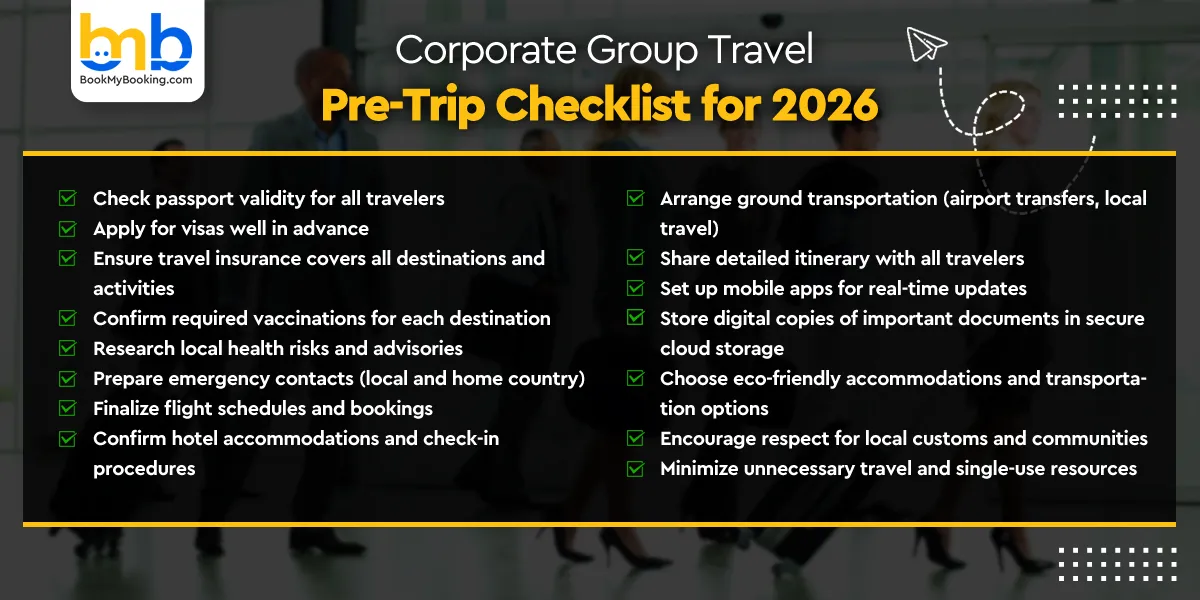
- Check that everyone's passport is still valid.
- Apply for visas early so they don't get stuck.
- Ensure travel insurance covers every destination and activity.
- Double-check entry rules and transit requirements.
Everyone feels more organized and at ease when a clear timetable is shared. Ensure all travelers receive a comprehensive briefing that includes flight schedules, accommodation details, emergency contacts, and localized travel advice. People feel more at ease when they are knowledgeable, which makes group management much easier.
Corporate Travel Rules and Compliance in 2026
By 2026, corporate travel rules will be about much more than just how much money you can spend on lunch or which airline you have to use. Companies are now held responsible for keeping staff safe, protecting their private data, and ensuring travel is conducted in a way that is fair to staff and kind to the environment. Most businesses now have rules requiring travel to be sustainable and safe for employees.
As the organiser, you have to ensure every booking is made through the right people, that the insurance is correct, and that everything is recorded in the company's system. This keeps things honest and helps the company save money while staying safe legally. Following the rules also means knowing the laws of the country you are visiting. Things like workplace laws, customs, and how you are expected to behave can vary widely across the world. If you don't know these rules, the company could face a fine or a bad reputation. Using digital tools to follow these rules is now very common. Many companies use a single extensive computer system to track schedules and locations. You should be comfortable using these systems so you can give real-time updates.
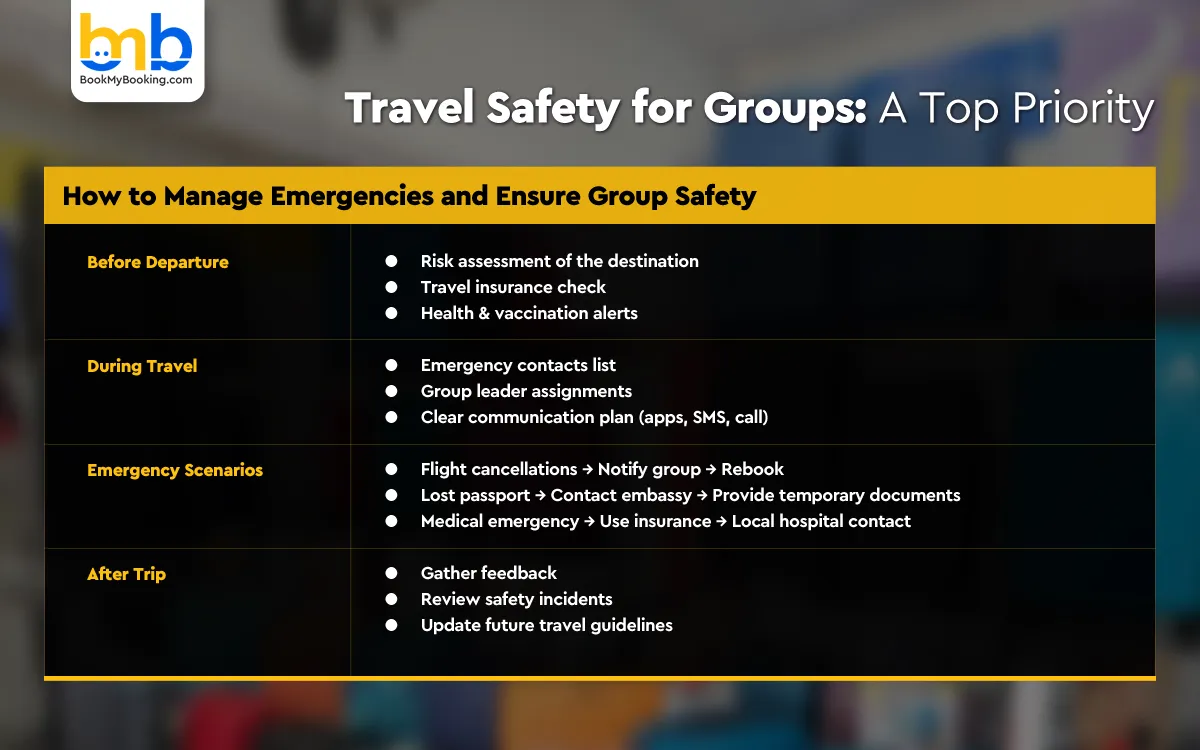
Keeping a group safe is one of the most significant parts of the job. Because there are so many people in one place, you have to think ahead about safety instead of just waiting for something to go wrong. This is why travel safety for groups is so important. Before anyone leaves, you should check for potential risks at the destination, such as:
- Health issues or local outbreaks.
- Political instability or protests.
- Bad weather or natural risks.
- Poor local roads or infrastructure.
Sharing this safety info with the team helps them make wise choices while they are away. You also need an emergency plan. You should have clear steps to follow if someone gets sick, loses their passport, if a flight is cancelled, or if there is a security problem. Everyone should know exactly who to call and what to do if something happens. Make sure the travel insurance is high-quality and covers medical help, getting people home in an emergency, and lost bags. In a group, a small insurance gap can quickly turn into a costly and stressful problem. You should also remind everyone about any shots they need and how to find a doctor in the city you are visiting. A prepared group stays safe.
Technology and Digital Tools for Organizers
Technology is the main factor in managing group travel today. Digital tools help you keep track of complex schedules, communicate with everyone easily, and fix things quickly if they change.
- Mobile Apps: These let you send updates, boarding passes, and hotel info straight to everyone's phone. This prevents confusion, especially when moving a large crowd through an airport or hotel lobby.
- Cloud Storage: Having digital copies of your passport, visa, and insurance information in a secure "cloud" means you can find them in seconds if you need to.
Protecting data is also very important. You have to make sure everyone's private information is kept safe and complies with privacy laws. People need to trust that their personal information is being handled carefully.
On-Ground Coordination and Group Management
Once the trip actually starts, keeping things organized on the ground is what matters most. Getting everyone to the hotel, checked in and into their meetings requires perfect timing and clear talking. You should work closely with on-site personnel, such as hotel staff and van drivers, to ensure everything runs smoothly. It is always a good idea to add some extra "buffer" time to the schedule in case a flight is late or traffic is bad.
Having clear leaders also helps. If you have a few people acting as "group leaders," everyone else always knows who to ask for help. This keeps people from getting lost and keeps the schedule moving. Being flexible is just as important as being organized. Even the best plans can go wrong sometimes. If you can stay calm and fix a problem quickly while keeping everyone updated, people will see you as a true professional.
Sustainability and Responsible Group Travel
Being eco-friendly is now expected from every traveller. Many companies now want you to make choices that don't hurt the planet or the local people. This might mean:
- Choosing a hotel with a "green" certificate.
- Using trains or buses instead of lots of cars.
- Minimizing unnecessary travel where possible.
Group travel can be better for the environment than many single trips if it is well planned. Being a responsible traveller also means being respectful to the local community. You should encourage the group to follow local customs and buy from local shops. This looks good for your company and makes the trip feel more meaningful for everyone. In 2026, planning a responsible trip shows that both you and your company care about the world.
Organiser Essentials for Successful Corporate Group Travel
There are a few organizer essentials that every person in charge of travel must have. These include being very detail-oriented, a great communicator, and being able to solve problems quickly. You have to stay up to date on new travel laws, airline rules, and entry requirements for different countries. Regularly checking your company's travel policy will help you avoid breaking the rules.
Talking to the travellers is the most crucial part. They should feel like they have your support before they leave, while they are away, and after they come back. When you give clear instructions and are easy to reach, the group will trust you and work with you much better. After the trip, it's a great idea to ask for feedback. Finding out what people liked and what they didn't will help you make the next trip even better.
Looking Ahead: Corporate Group Travel Beyond 2026
Work travel for groups will continue to evolve as businesses grow worldwide and employees seek trips that actually matter. The person organizing these trips will become even more important, balancing the need to save time, keep people safe, and provide a great experience.
Technology will make planning easier, but the need to look after people and the planet will only grow stronger. The people who stay informed and are willing to change with the times will find that managing work travel is a gratifying job. Success in the future will be defined by how well you understand the rules, how you handle risks, and how much you care about the people you are travelling with.
Conclusion
In 2026, planning a corporate retreat extends far beyond logistics. Success requires a foundation of trust, accountability, and meticulous preparation. Beyond navigating complex regulations, organizers must prioritize employee well-being while ensuring every aspect of the journey aligns with the company's strategic goals. By following clear corporate group travel guidelines, adhering to the company's corporate travel rules, and prioritizing safety, you can lead your group on any journey with confidence. When a trip is planned well, it makes teams stronger and helps people work better together. In a world where every trip counts, having a planner who knows what they are doing makes all the difference.