

&format=webp&quality=85)
Corporate events are more than just gatherings; they are meticulously orchestrated experiences that reflect a company’s brand, values, strategic goals, and flawless planning. Behind every flawless corporate event is a science, a combination of psychology, logistics, planning, and creativity.
With attendees walking into a corporate event that feels effortless, where registration is smooth, the lights hit just right, the speakers transition without awkward pauses, and every detail seems perfectly timed, they often describe it as well-organised or lucky.
In reality, there is nothing accidental about flawless and efficient event planning. Behind the polished surface lies a carefully engineered system of strategy, psychology, logistics, technology and human coordination. This is the science of seamless.
Corporate events today are no longer simple gatherings. They are high-stakes brand moments. Whether it’s a product launch, annual conference, leadership summit, investor meet, or employee offsite, events shape perception, trust, morale, and business outcomes. A single misstep, a delayed session, poor sound quality, or unclear signage can quietly erode credibility.
Conversely, a seamless event itinerary experience can elevate a brand, inspire loyalty, and create lasting impact.
This blog explores what truly goes on behind every flawless corporate event. From planning frameworks and behavioural science to operational workflows and crisis management, we unpack the invisible systems that turn complexity into calm.
Every seamless event begins with clarity, not décor, not entertainment, but purpose.
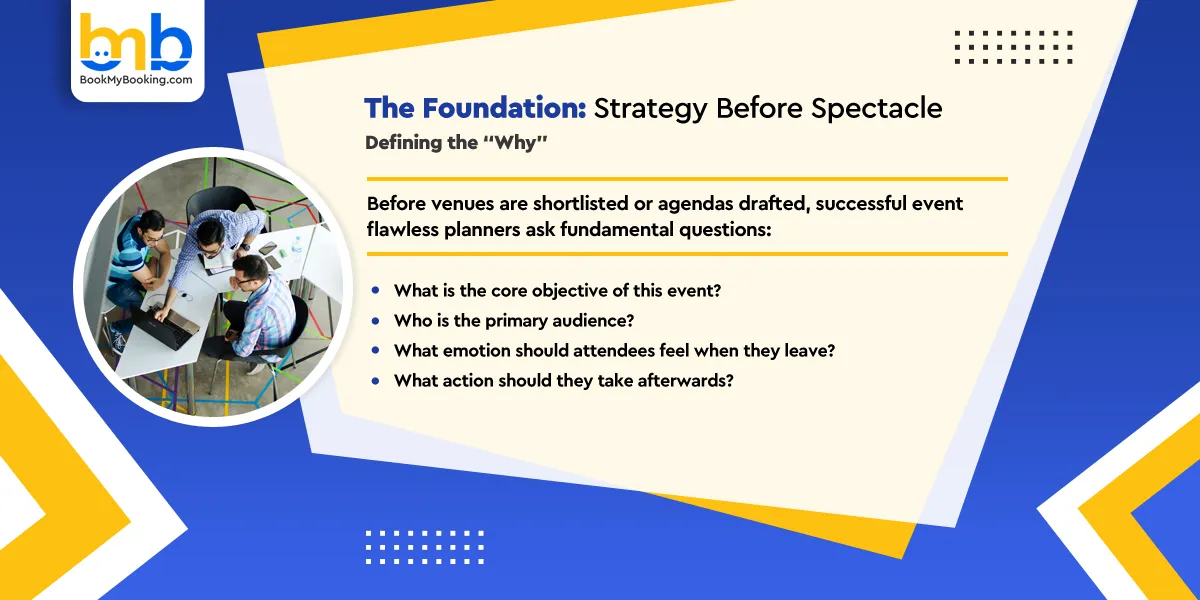
A leadership summit may aim to align vision. A product launch may focus on excitement and recall. An internal town hall might prioritise trust and transparency. These objectives shape every decision that follows.
Translating Goals into Experience Design
Once goals are clear, they are translated into an experience strategy. For example:
- If the goal is engagement, sessions are shorter, interactive, and varied.
- If the goal is authority, the event emphasises thought leadership, premium production, and strong narrative flow.
- If the goal is connection, networking formats and spatial design take priority.
Seamless event itineraries come from alignment. When every element serves the same strategic purpose, the event feels coherent rather than chaotic.
The Psychology of Attendees: Designing for Human Behaviour
Flawless events feel intuitive because they are designed around how people think, feel, and move.
Cognitive Load and Flow
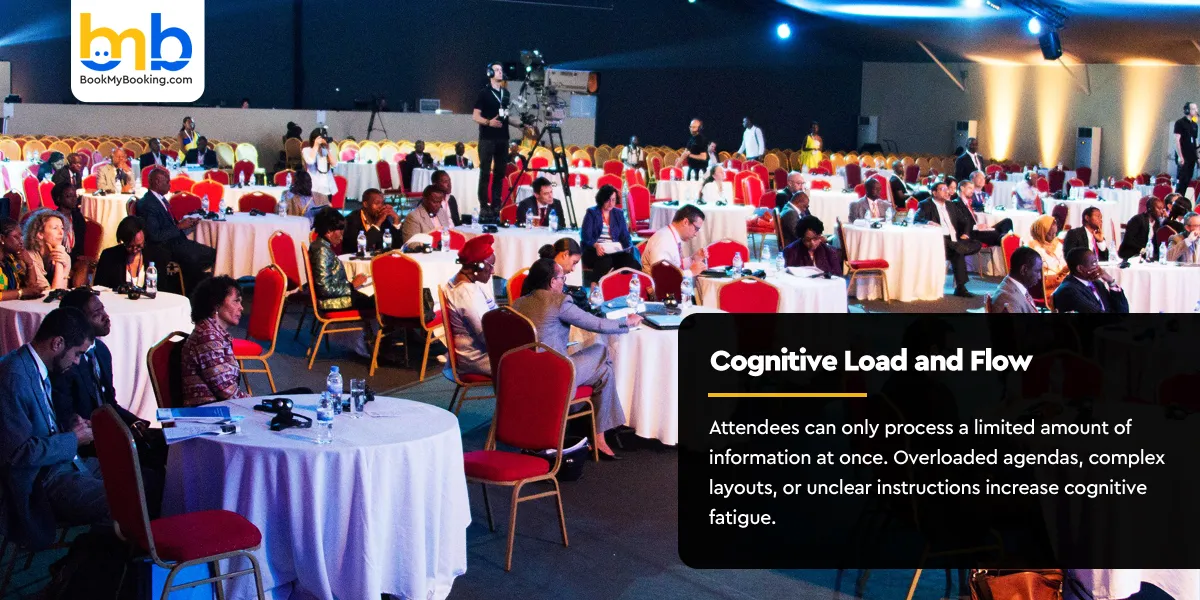
Attendees can only process a limited amount of information at once. Overloaded agendas, complex layouts, or unclear instructions increase cognitive fatigue.
Seamless events itineraries reduce friction by:
- Using clear signage and wayfinding- Clear signage and intuitive wayfinding reduce mental effort by helping attendees navigate the venue effortlessly. When directions, session rooms, restrooms, and help desks are easy to identify, participants spend less energy figuring out where to go and more energy engaging with the event. This clarity minimizes stress and prevents confusion-driven fatigue.
- Structuring agendas with natural energy peaks and breaks- Well-structured agendas align with human attention cycles. High-focus sessions are placed during peak energy periods, while breaks and lighter activities allow mental recovery. This balance prevents information overload, maintains engagement throughout the day, and ensures attendees remain attentive rather than exhausted or disengaged and promote efficient event planning.
- Avoiding unnecessary choices at critical moments- Reducing choices during key moments such as registration, session entry, or transitions lowers decision fatigue. When attendees are guided toward clear options, they move smoothly through the event without hesitation. This simplicity creates a sense of flow, allowing participants to focus on content and connections instead of constant decision-making.
This creates a sense of flow, where attendees move from one experience to the next without confusion.
Emotional Journey Mapping
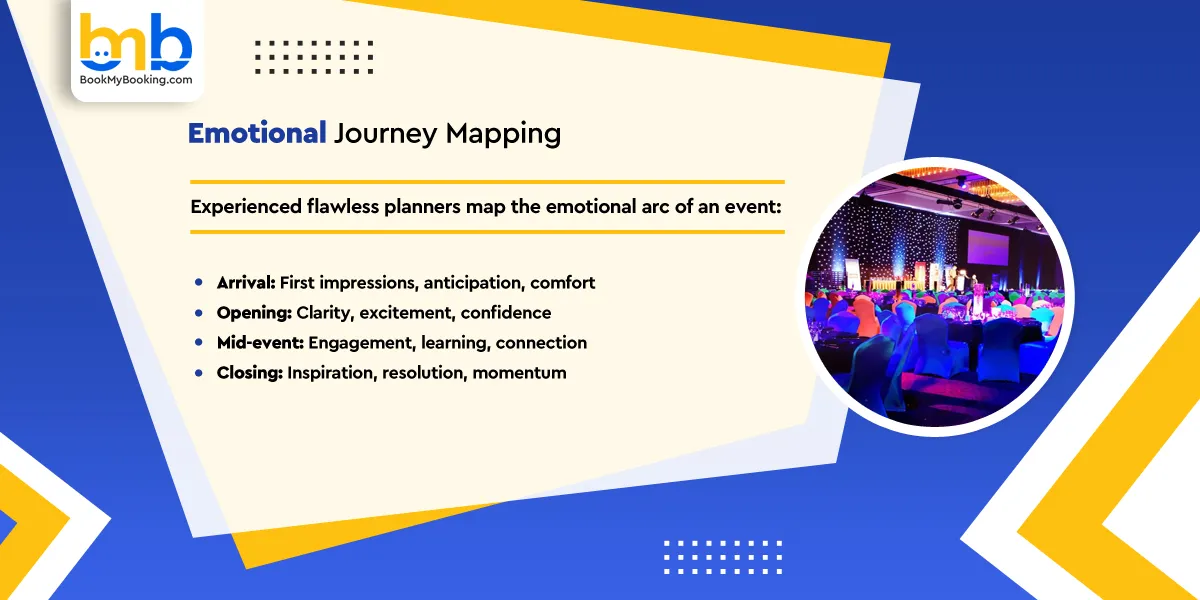
Experienced flawless planners map the emotional arc of an event:
- Arrival: First impressions, anticipation, comfort
- Opening: Clarity, excitement, confidence
- Mid-event: Engagement, learning, connection
- Closing: Inspiration, resolution, momentum
Music, lighting, speaker order, and even food timing are used to support this emotional journey. When emotions are managed intentionally, the event feels smooth and purposeful.
Precision Planning: The Art of Invisible Preparation
What looks seamless on event day itinerary is usually the result of months of meticulous planning.
Master Timelines and Run Sheets
At the heart of seamless execution is the run sheet, a minute-by-minute blueprint of the event. It includes:
- Session start and end times-Clearly defined session timings keep the event on track and maintain momentum. They ensure speakers, technicians, and attendees stay aligned, preventing delays that can disrupt flow and reduce engagement.
- Speaker cues-Speaker cues guide presenters on entrances, exits, and key moments, ensuring smooth handovers. This preparation in flawless planning eliminates awkward pauses, builds the speaker's confidence, and maintains a polished, professional stage presence.
- Technical transitions-Planned technical transitions coordinate lighting, sound, visuals, and stage changes seamlessly. Precise timing avoids disruptions, ensuring technology supports the experience without drawing attention or breaking audience focus.
- Contingency buffers-Contingency buffers allow flexibility for unexpected delays or changes. These built-in time cushions prevent minor issues from escalating, ensuring the seamless event itinerary continues smoothly without compromising the overall schedule.
Every stakeholder, from AV teams to hosts, works from the same document. This shared source of truth prevents misalignment.
Dependency Mapping
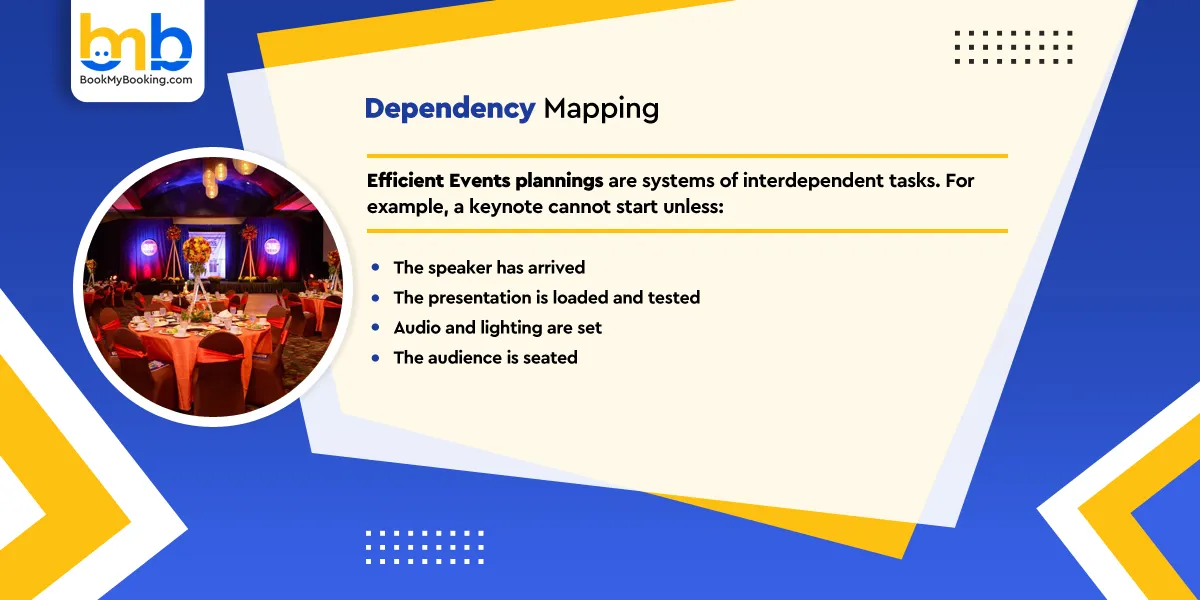
Efficient Events plannings are systems of interdependent tasks. For example, a keynote cannot start unless:
- The speaker has arrived
- The presentation is loaded and tested
- Audio and lighting are set
- The audience is seated
Professional planners identify these dependencies early and build safeguards around them. This systems-thinking approach is a hallmark of flawless events.
Technology as the Silent Backbone
Technology enables seamlessness but only when it is reliable, tested, and invisible.
Event Tech Ecosystems
Modern corporate events rely on integrated technology stacks, including:
- Registration and check-in platforms
- Event apps for agendas and networking
- Audio-visual systems
- Live streaming and hybrid tools
- Data capture and analytics
The key is integration in efficient event planning. When systems communicate, data flows smoothly, and attendees experience continuity.
Redundancy and Testing
Seamless events assume that technology can fail and prepare accordingly.
- Backup microphones
- Duplicate presentation files
- Secondary internet connections
- Offline check-in options
Multiple rehearsals and technical run-throughs ensure that problems are solved before attendees ever notice them.
The Human Factor: Teams, Roles, and Communication
Even with the best technology, people make events work.
Clear Role Definition
Flawless planning execution depends on everyone knowing:
- What they are responsible for
- Who they report to
- How decisions are escalated
From front-desk staff to backstage managers, clarity reduces hesitation and errors.
Real-Time Communication Systems
On event day, communication must be instant and precise. Teams use:
- Walkie-talkies or headsets
- Dedicated messaging channels
- Command centres for decision-making
This allows for quick adjustments without disrupting the attendee experience.
Vendor Orchestration: Managing Multiple Stakeholders
Corporate events involve numerous external partners, venues, caterers, AV teams, decorators, security, and more.
Alignment Through Briefings
Seamless events itineraries require that every vendor understands not just their task, but the overall vision. Pre-event briefings align expectations, timelines, and standards.
Single Point of Control
Professional planners act as conductors, ensuring that all vendors operate in harmony. Centralised coordination prevents conflicting instructions and last-minute chaos.
Risk Management and Crisis Readiness
True seamlessness is tested when something goes wrong.
Anticipating the Unexpected
Experienced teams conduct risk assessments covering:
- Weather disruptions
- Speaker cancellations
- Technical failures
- Health and safety issues
Each risk has a predefined response plan.
Calm Under Pressure
When issues arise, the goal is not to eliminate problems instantly, but to contain them discreetly. Attendees remember how events made them feel, not the small issues they never noticed.
Design, Atmosphere, and Sensory Detail
Seamless event itineraries are also sensory.
Spatial Design
Well-designed spaces guide movement naturally. Registration areas are intuitive. Networking zones feel inviting. Session rooms are acoustically and visually optimized.
Multisensory Consistency
Lighting, sound, visuals, scent, and temperature all influence perception. Consistency across these elements reinforces brand identity and comfort.
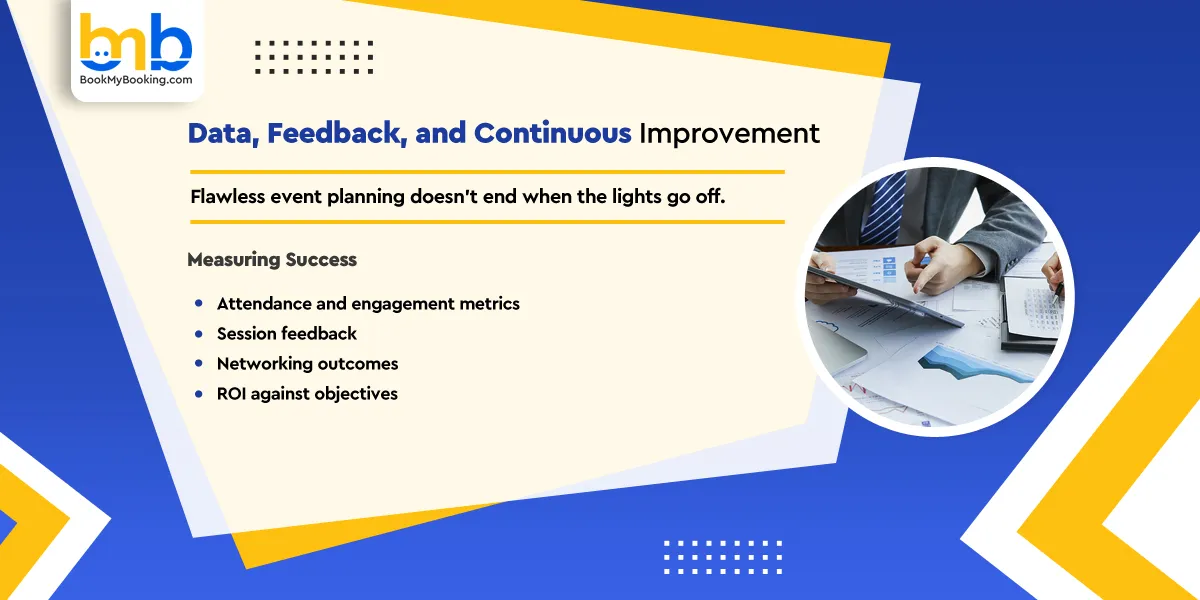
Learning Loops
Insights from one event inform the next. This iterative approach is how organisations move from “good” to consistently seamless.
The Future of Seamless Corporate Events
As expectations rise, seamlessness will become the baseline, not the differentiator.
● Personalisation at Scale
Data-driven personalisation will tailor agendas, content, and networking to individual attendees.
● Hybrid and Phygital Experiences
Blending physical and digital experiences will demand even greater precision—but also offer greater reach.
● Sustainability as a Core Metric
Future seamlessness event itineraries will include ethical sourcing, waste reduction, and carbon-conscious planning.
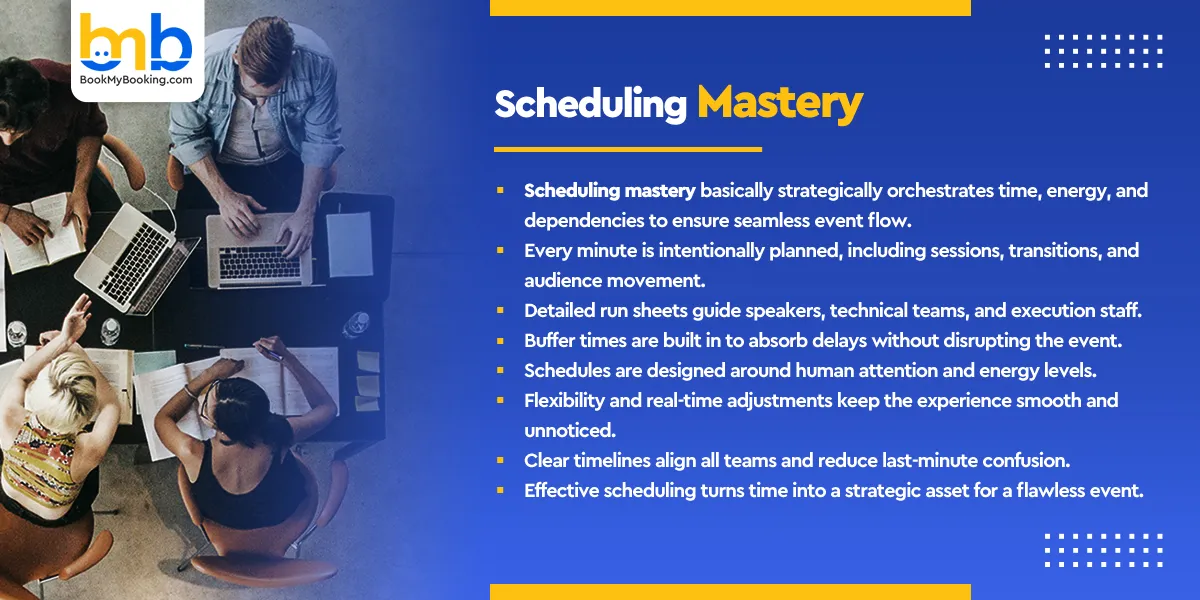
Scheduling mastery is the hidden engine behind a seamless corporate event. It goes far beyond creating an agenda; it is the science of orchestrating time, energy, and dependencies with precision. Every session, transition, and break is carefully sequenced to maintain audience engagement while allowing room for flexibility. Master schedulers build detailed run sheets that map each minute of the event, accounting for speaker cues, technical checks, and contingency buffers. They understand human attention spans, placing high-impact moments at peak energy times and avoiding cognitive overload. Importantly, scheduling mastery also means planning for the unexpected.
Built-in buffer zones, parallel task planning, and clear escalation paths ensure that delays never ripple into chaos. When done right, scheduling feels invisible to attendees. They simply experience a natural, effortless flow, never realising that behind the scenes, time itself is being managed with discipline, foresight, and strategic intent.
Scheduling mastery is one of the most critical yet least visible elements of a flawless corporate event. It is not merely about assigning time slots; it is about designing a rhythm that aligns objectives, audience energy, and operational realities. A well-crafted schedule anticipates how long people take to move between spaces, how quickly speakers transition on and off stage, and how technical setups impact flow. Every minute is intentional.
Expert event planners work with layered schedules, high-level agendas for stakeholders and detailed run sheets for execution teams. These include speaker arrival times, rehearsals, technical cues, content loading, and backup scenarios. Buffer time is strategically embedded, not as empty space, but as insurance against unpredictability.
Scheduling mastery also considers human behaviour. High-focus sessions are placed when attention is naturally strongest, while networking, meals, and lighter content are positioned to prevent fatigue. Breaks are timed to sustain engagement rather than interrupt momentum.
Most importantly, a strong schedule is flexible. Real-time monitoring and quick decision-making allow teams to adjust without attendees ever noticing. When scheduling is mastered, the event unfolds with effortless flow, reinforcing professionalism, trust, and confidence, making complexity disappear behind a calm, controlled experience. Scheduling mastery also strengthens collaboration across teams. When timelines are clearly defined and shared, every stakeholder, from speakers and technicians to hospitality and security, operates in sync. This alignment reduces last-minute confusion and empowers teams to act proactively rather than reactively. A well-managed schedule becomes a decision-making tool, helping planners prioritise what truly matters in high-pressure moments. It also allows leaders and hosts to stay confident, knowing exactly what comes next.
Ultimately, precise scheduling mastery transforms time into a strategic asset, ensuring that every moment of the event delivers value while preserving a smooth, professional experience for attendees.
Final Thoughts: Seamless Is a Science and an Art
But what lies behind every successful seamless event planning is a combination of strategy, psychology, technology, and human expertise. Seamless is not about being flawless; it’s about design, preparation, and flexibility. When executed well, the audience doesn’t see the complexity. They feel clarity, confidence, and connection. And that is the science of seamless – making all the moving parts work together as one. By managing time with purpose and foresight, scheduling mastery eliminates uncertainty and stress. It makes every interaction feel meaningful, every transition feel smooth, and the entire event experience feel precise, credible, and operationally excellent.