

The global wellness corporate-travel trips landscape for wellness is experiencing a fundamental shift. As organisations face rising burnout, mental fatigue, and disengagement across workforces, traditional business meetings are being re-evaluated. Long hours in windowless conference rooms, a tightly packed agenda, and constant digital stimulation are no longer delivering the outcomes companies expect. Productivity, creativity and collaboration suffer when people are emotionally exhausted. In response, a new model of corporate gathering is gaining momentum, mindful MICE retreats and resorts where wellness and work coexist intentionally. These retreats integrate professional objectives with mental, physical, and emotional well, offering a sustainable alternative to conventional meetings and incentive travel.
Wellness Meets Work is not a passing trend. It reflects a more profound understanding that high performance depends on healthy people. Mindful MICE retreats are reshaping how organisations approach meetings, leadership development, incentives, and corporate wellness trips by placing well-being at the centre of business strategy. This blog explores the rise of mindful MICE restretas, why they matter, how they are designed and what they mean for the future of corporate travel and business events.
Understanding Mindful MICE Retreats
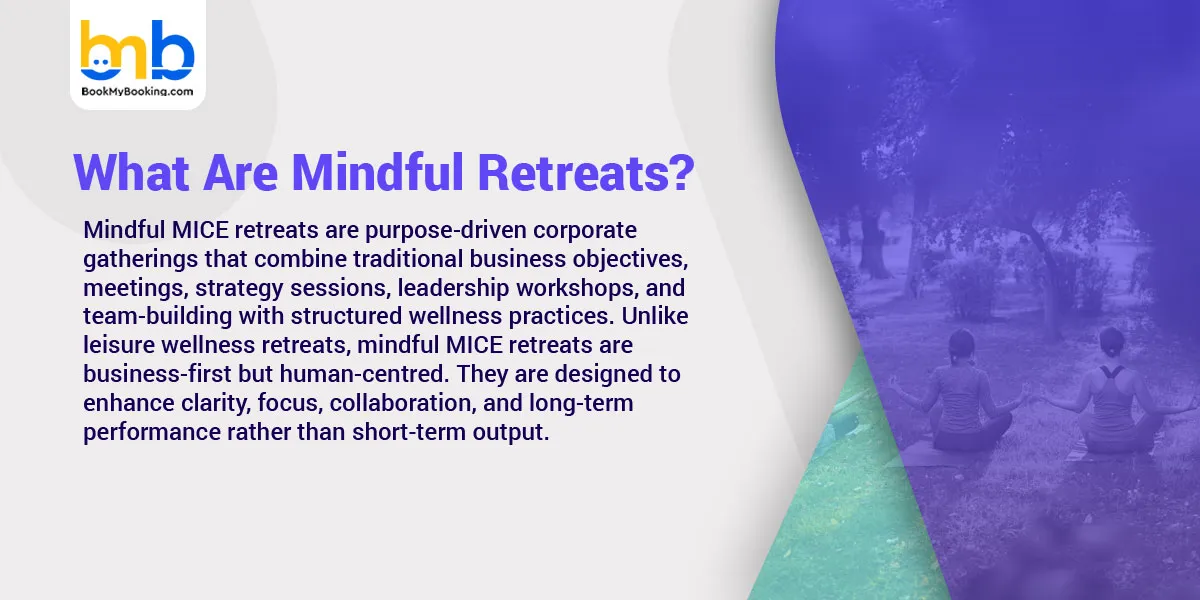
Key Characteristics
Mindful MICE retreats typically include-
- Balanced schedules that avoid cognitive overload
- Wellness travel activities are integrated into the agenda
- Natural or serene environments
- Emphasis on reflection, presence, and intentional engagement
- Outcomes aligned with organisational goals
The goal is not relaxation alone but sustainable productivity.
Why Wellness Has Become Central to Corporate Strategy
Wellness travel has become central to corporate strategy because healthy employees are more engaged, productive, and resilient. Organisations now recognise that physical and mental well-being directly impact performance, creativity, and retention. Rising workplace stress, burnout, and changing employee expectations have pushed companies to prioritise holistic wellness. By investing in wellbeing initiatives, businesses reduce absenteeism, strengthen employer branding, and build sustainable, high-performing work cultures that support long-term growth.
The Cost of Burnout
The cost of burnout is a one of the major mindful MICE retreat to consider as it extends beyond individual wellbeing to impact organizational performance. Chronic stress leads to reduced productivity, disengagement, higher absenteeism, and increased turnover. Over time, burnout weakens morale and innovation, increasing recruitment and healthcare costs while undermining long-term business resilience and sustainable growth.
Burnout is no longer an individual issue; it is an organisational risk. Studies constantly show that burnout leads to-
- Reduced productivity: Burnout drains mental energy and focus, leading to slower task completion, increased errors, and a decline in overall work efficiency.
- Higher absenteeism: Chronic stress leads to physical and emotional exhaustion, resulting in frequent sick leave, unplanned absences, and disengagement from daily responsibilities.
- Increased employee turnover: Prolonged burnout pushes employees to seek healthier work environments, leading to higher resignation rates and higher recruitment and training costs.
- Poor decision-making: Mental fatigue impairs judgment and critical thinking, leading to reactive decisions, overlooked details, and higher strategic and operational risks.
- Lower engagement and morale: Burnout erodes motivation and emotional commitment, weakening team spirit, collaboration, and overall workplace morale.
Traditional corporate wellness trips and meetings often worsen these issues by adding pressure rather than relieving them.
The Shift in Workforce Expectations
Workforce expectations have shifted toward flexibility, purpose, and well-being. Employees now seek supportive environments, mental health resources, work-life balance, and growth opportunities rather than just salary. This change, driven by generational values and post-pandemic realities, has made employee-centric policies a critical factor in attracting and retaining talent is a part of mindful retreat.
Modern professionals expect employers to prioritise well-being. Employees increasingly value:
- Mental health support: Access to psychological safety, counseling resources, and stigma-free emotional support systems.
- Work-life integration: Flexible schedules that harmonize professional responsibilities with personal wellbeing.
- Meaningful engagement: Purpose-driven work that aligns individual values with organizational goals.
- Respect for personal limits: Recognition of boundaries to prevent overload and promote sustainable performance.
Organisations that ignore these expectations risk losing talent, credibility, and competitiveness.
Mindful MICE retreats address these challenges directly by creating environments where people can think clearly, connect deeply, and contribute meaningfully.
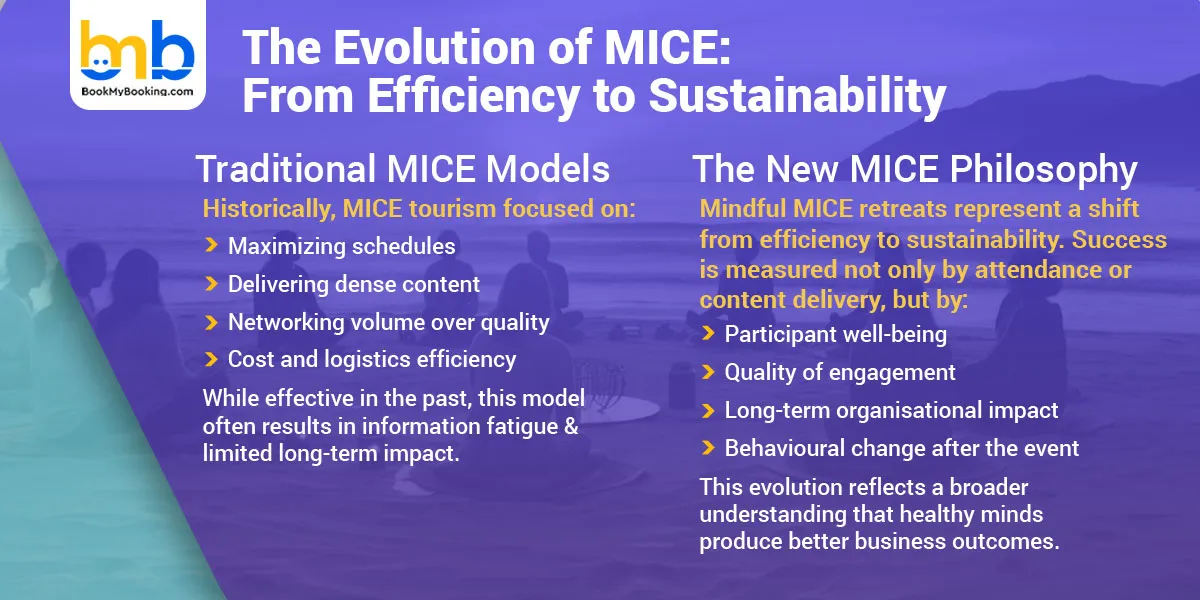
The Science Behind Mindful Work Environments
Cognitive Performance and Mental Rest
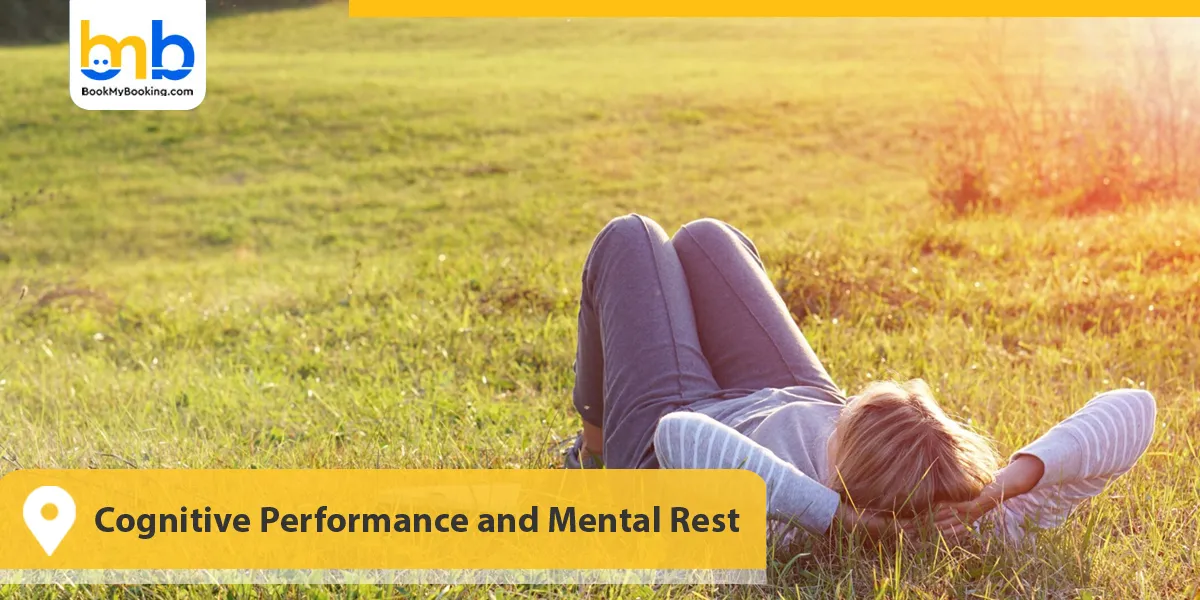
Mindful retreats and work environments support cognitive performance by reducing mental fatigue and stress. Adequate mental rest improves focus, memory, and decision-making, allowing the brain to recover from constant stimulation. When employees experience psychological calm, they demonstrate sharper attention, faster problem-solving, and enhanced creative thinking.
Neuroscience shows that continuous cognitive demand reduces decision quality and creativity. Mental rest is essential for:
- Strategic thinking: Ability to plan long-term objectives with clarity and an informed perspective.
- Problem-solving: Enhanced capacity to analyse challenges calmly and develop practical solutions.
- Emotional regulation: Improved control over emotional responses during high-pressure situations.
Mindful MICE retreats intentionally design pauses into the agenda, allowing the brain to recover and function optimally.
Mindfulness and Focus
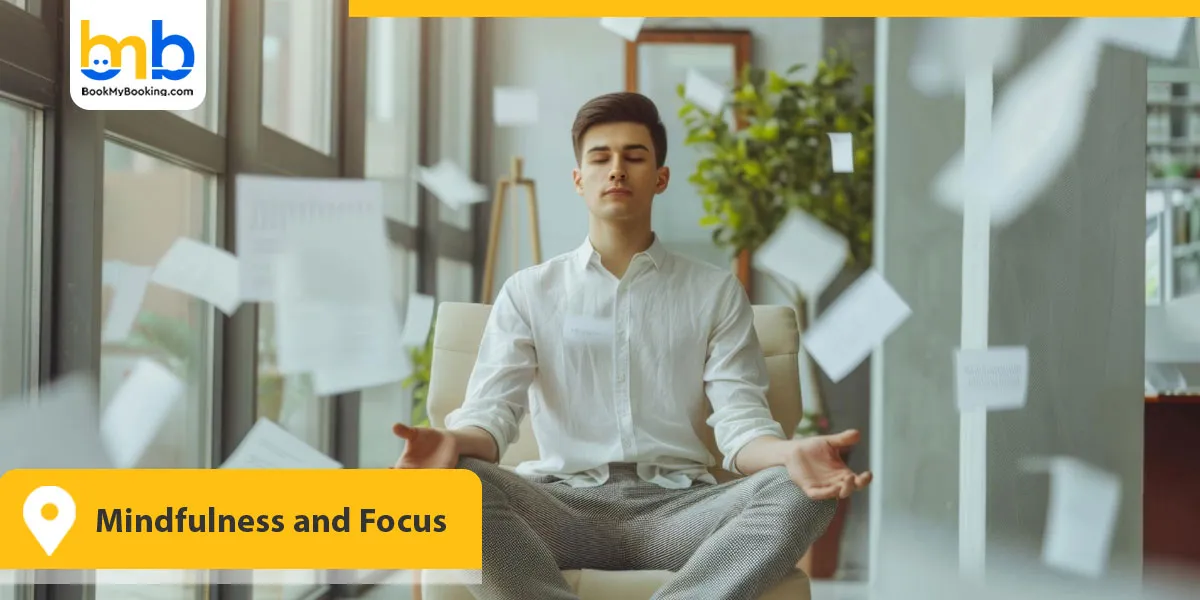
Mindfulness practices improve:
- Attention span: Sustained focus and reduced distraction through mental clarity.
- Emotional intelligence: Heightened awareness of self and others to navigate relationships effectively.
- Stress management: Practical coping techniques to handle pressure and maintain balance.
- Interpersonal communication: Clear, empathetic exchanges that strengthen collaboration and trust.
When incorporated into corporate settings, mindfulness enhances both individual performance and team dynamics.
Designing Effective Mindful MICE Retreats
Purpose-Driven Planning
Designing effective mindful MICE retreats begins with purpose-driven planning that aligns business goals with participant wellbeing. Every activity, session, and environment is intentionally curated to inspire clarity, connection, and renewal. This strategic approach ensures retreats deliver meaningful outcomes while fostering engagement, reflection, and long-term organisational impact.
Every mindful MICE retreat begins with a clear objective. Organisers must define:
- Business goals (strategy, alignment, leadership development, innovation)
- Human goals (well-being, connection, clarity, resilience)
Wellness elements are then selected to support—not distract from—these objectives.
Destination Selection Matters
The environment plays a critical role in mindful retreats. Ideal destinations offer:
- Natural surroundings (mountains, beaches, forests, deserts):
Nature-rich settings naturally lower stress, restore mental clarity, and enhance creativity through sensory calm and environmental connection. - Quiet, low-distraction settings:
Minimal noise and digital interruptions help participants maintain focus, presence, and deeper cognitive engagement. - Clean air and open spaces:
Fresh air and spacious environments improve breathing, energy levels, and overall psychological wellbeing. - Cultural authenticity:
Authentic local experiences create meaningful connections, grounding participants in place while encouraging respect and perspective.
These environments help participants disconnect from daily stressors and engage more fully.
Urban wellness travel destinations are also emerging, offering secluded retreats within major business hubs that are accessible without sacrificing calm.
Balanced Agenda Design

Balanced agenda design ensures a thoughtful mix of work sessions, wellness travel activities, and downtime. By avoiding cognitive overload and allowing space for reflection and recovery, participants remain energised and focused. This approach improves learning retention, engagement, and overall experience, making meetings and retreats more productive and sustainable.
Mindful MICE retreats avoid overloaded schedules. Instead, they follow a rhythm that balances:
- Work sessions
- Wellness practices
- Reflection time
- Informal interaction
- Morning mindfulness or movement
- Focused business workshops
- Midday rest or nature exposure
- Collaborative discussions
- Evening reflection or low-stimulation activities
This structure supports sustained attention and meaningful engagement.
Integrated Wellness Practices
Integrated wellness practices combine physical, mental, and emotional well-being into workplace and retreat experiences. By blending movement, mindfulness, nutrition, and stress management, organisations create balanced environments that support sustained energy and focus. This holistic approach enhances engagement, reduces burnout, and promotes long-term performance and resilience.
Wellness in mindful MICE retreats is intentional and relevant. Common practices include:
- Guided mindfulness or meditation:
Facilitated practices that help participants cultivate present-moment awareness, mental clarity, and emotional balance. - Breathwork for stress regulation:
Intentional breathing techniques designed to calm the nervous system, reduce stress responses, and enhance focus. - Yoga or gentle movement:
Low-impact physical practices that release tension, improve flexibility, and support mind-body alignment. - Nature walks or outdoor sessions:
Mindful engagement with natural surroundings to restore attention, inspire creativity, and encourage reflective thinking. - Digital detox periods:
Planned breaks from screens and notifications to reduce cognitive overload and promote deeper human connection.
These practices are adapted for corporate audiences and aligned with professional outcomes.
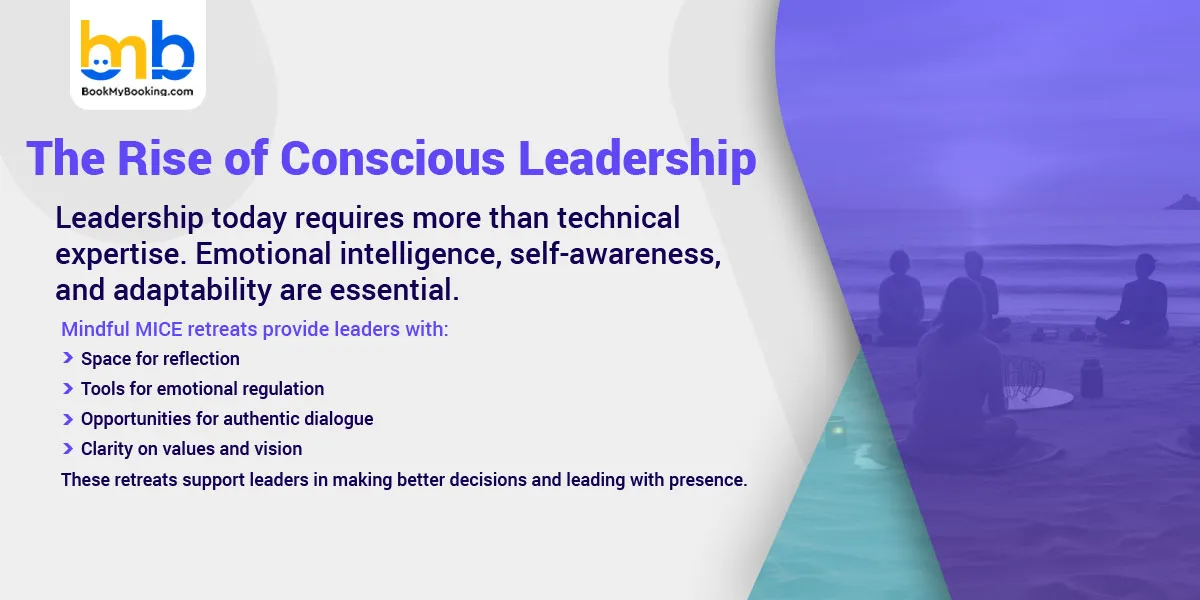
Leadership Development Through Mindful Retreats
Mindful retreats support leadership development by creating psychologically safe environments where participants feel respected and heard. When individuals can express ideas without fear of judgment, trust deepens and collaboration improves. This safety encourages authentic leadership, open communication, and meaningful growth, strengthening team alignment and long-term organisational effectiveness.Creating Psychological Safety

Mindful environments encourage openness and trust. When leaders and teams feel psychologically safe, they:
- Communicate honestly:
Encourage transparent, truthful dialogue that builds trust, prevents misunderstandings, and fosters stronger interpersonal relationships within teams. - Collaborate more effectively:
Promote active cooperation, shared problem-solving, and leveraging diverse skills to achieve collective goals efficiently and harmoniously. - Address challenges proactively:
Anticipate potential obstacles, take initiative to resolve issues early, and implement solutions that prevent escalation and maintain team momentum.
This safety is difficult to achieve in high-pressure, traditional meeting formats.
Team Alignment and Collaboration
Strengthening Human Connection
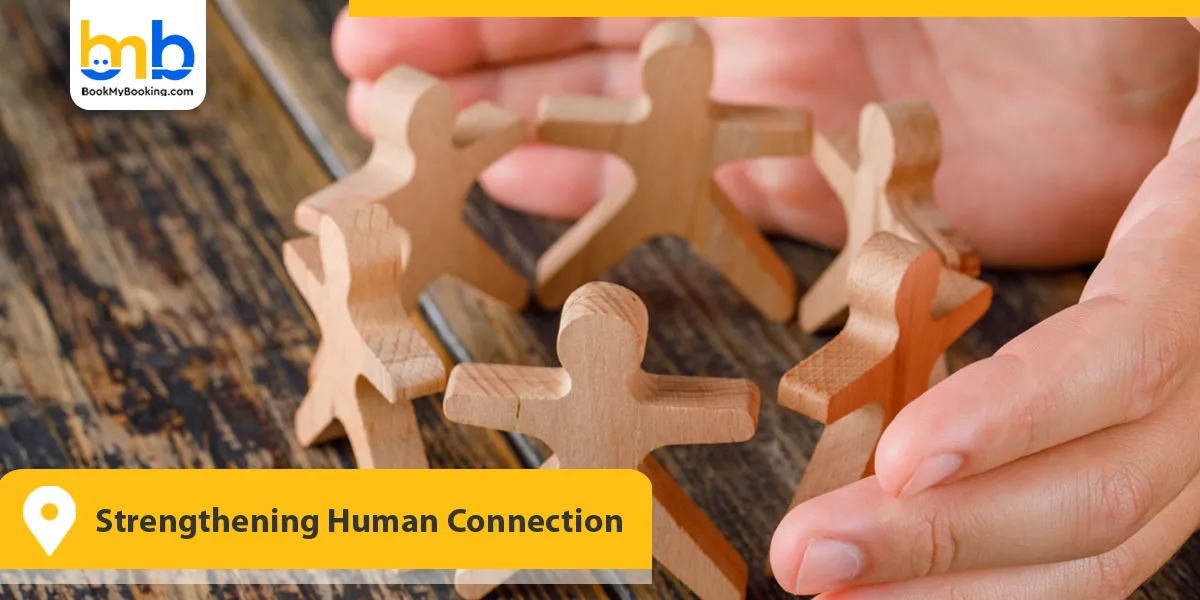
Mindful retreats strengthen human connection by fostering genuine interactions beyond formal work settings. Shared experiences, open dialogue, and reflective activities build trust and empathy among participants. These deeper relationships improve communication, reduce conflict, and create a sense of belonging that positively influences workplace culture and collaboration.
Remote and hybrid work has weakened informal connections within teams. Mindful MICE retreats and wellness corporate trips restore these connections by:
- Encouraging face-to-face interaction:
Foster in-person engagement to build trust, deepen relationships, and enhance collaboration through direct, authentic communication. - Removing digital distractions:
Limit phones, emails, and notifications to improve focus, presence, and the quality of participant engagement. - Creating shared experiences:
Design collaborative activities and immersive moments that strengthen team bonds, encourage empathy, and cultivate lasting connections.
Stronger relationships translate into better collaboration long after the retreat ends.
Enhancing Team Performance

Enhancing team performance through mindful MICE retreat environments involves aligning individual well-being with collective goals. When teams feel supported and connected, they collaborate more effectively, communicate clearly, and solve problems creatively. Reduced stress and improved focus enable teams to perform consistently, adapt to challenges, and achieve sustainable high performance.
Teams that experience mindful retreats often report:
- Improved communication:
Teams develop clearer, more effective ways to share ideas, provide feedback, and resolve misunderstandings, boosting collaboration and efficiency. - Greater empathy:
Participants gain a deeper understanding of colleagues’ perspectives and emotions, fostering compassion, support, and stronger interpersonal relationships. - More precise alignment on goals:
Shared experiences and focused discussions help teams unify around objectives, ensuring everyone understands priorities and works cohesively toward common outcomes. - Higher trust levels:
Trust grows as team members experience reliability, transparency, and consistent support, enabling open dialogue, risk-taking, and stronger collaboration.
These outcomes directly impact organisational effectiveness.
Incentive Travel Meets Wellness
Redefining Corporate Rewards

Wellness Corporate trip rewards are being redefined to include wellbeing, flexibility, and meaningful experiences alongside financial incentives. Organisations now recognise that recognition, personal growth, and work-life balance drive deeper satisfaction. These holistic rewards strengthen loyalty, engagement, and emotional commitment beyond traditional compensation models.
Incentive wellness travel is evolving. High-performing employees increasingly value:
- Personal well-being:
Prioritizing physical, mental, and emotional health through rest, movement, nutrition, and mindfulness to sustain energy, focus, and resilience. - Meaningful experiences:
Curated activities and interactions that inspire purpose, connection, and personal growth, leaving lasting impressions beyond routine work. - Time for reflection and renewal:
Dedicated moments for introspection, self-assessment, and mental recovery, allowing participants to recharge, gain clarity, and integrate learning effectively.
Mindful incentive retreats offer rewards that are restorative rather than exhausting.
Long-Term Motivation
Long-term motivation is sustained when employees feel valued, supported, and aligned with organisational purpose, thus contributing to wellness travel. Consistent well-being initiatives, growth opportunities, and positive work environments foster intrinsic motivation. This approach reduces burnout, improves retention, and encourages continuous performance by nurturing commitment rather than relying on short-term incentives.
Unlike traditional incentives focused on indulgence, wellness-based incentives:
- Prevent burnout:
Implementing supportive practices and balanced schedules reduces chronic stress, helping employees maintain energy, focus, and long-term health. - Reinforce sustainable performance:
By integrating wellbeing and mindful work strategies, teams can deliver consistent, high-quality results without compromising their physical or mental capacity. - Strengthen loyalty:
Employees who feel valued, supported, and connected are more committed, engaged, and motivated to remain with the organisation over time.
They signal that the organisation values long-term success over short-term output.
The Role of Sustainability in Mindful MICE
Environmental Responsibility
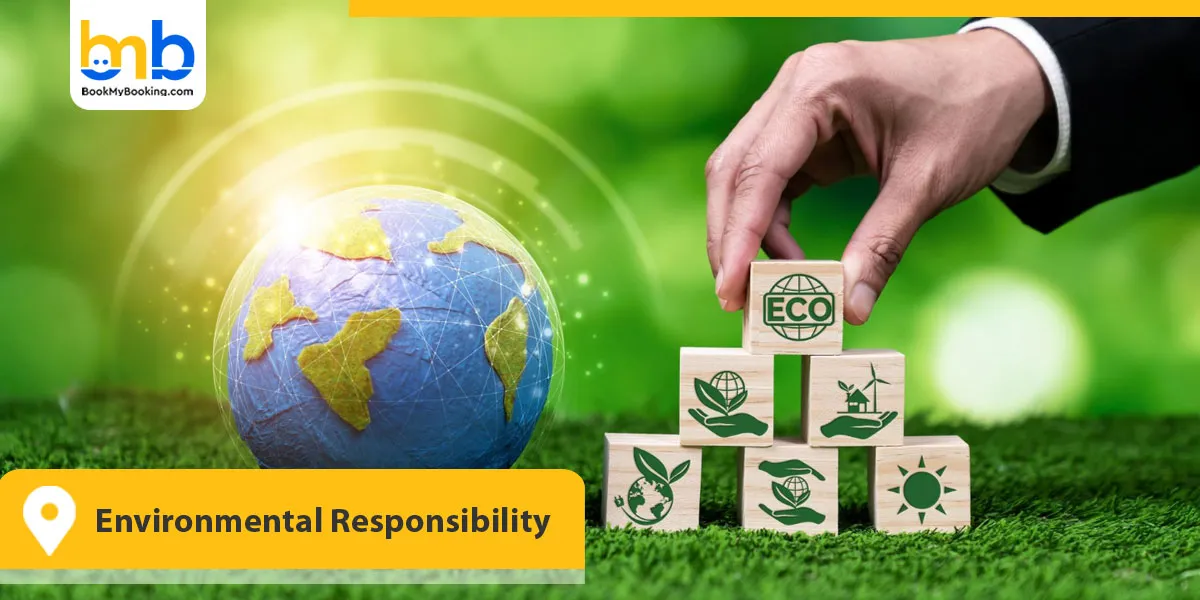
Environmental responsibility has become integral to wellness corporate trip's strategy as organisations adopt sustainable practices that minimise ecological impact. By prioritising eco-friendly venues, reducing waste, and supporting local communities, businesses demonstrate ethical leadership. This commitment enhances brand credibility, aligns with employee values, and contributes to long-term environmental and organisational sustainability.
Mindful retreats often align naturally with sustainable practices:
- Eco-friendly venues:
Select locations designed with sustainability in mind, incorporating energy efficiency, green building practices, and responsible resource management. - Local sourcing:
Prioritize local vendors, food, and materials to support regional economies and reduce transportation-related environmental impact. - Reduced waste:
Implement strategies to minimise single-use items, encourage recycling, and responsibly manage materials throughout events or retreats. - Minimal environmental impact:
Design activities and logistics to protect natural surroundings, preserve ecosystems, and promote sustainable practices for long-term ecological responsibility.
Sustainability enhances the authenticity of wellness-focused gatherings.
Supporting Local Communities
Supporting local communities through corporate travel trips and events creates shared economic and social value. By partnering with local vendors, artisans, and service providers, organisations contribute to regional development. This approach promotes cultural exchange, responsible tourism, and sustainable growth while strengthening community relationships and corporate social responsibility initiatives.
Mindful MICE retreats often involve:
- Local wellness practitioners:
Involve skilled local experts for yoga, meditation, or wellness workshops, providing authentic guidance while supporting regional talent and expertise. - Cultural experiences:
Integrate activities that immerse participants in local traditions, arts, and heritage, fostering appreciation, learning, and meaningful connections. - Community engagement:
Encourage participation in local initiatives, volunteer opportunities, or collaborations that give back to the community and promote social responsibility.
This approach benefits destinations while enriching the participant experience.
A New Paradigm for Business Travel
Wellness corporate trips refer to travel experiences centred on enhancing health and inner balance. From restorative spa rituals and mindful yoga practices to thoughtfully curated menus, this form of travel fosters a more profound sense of renewal. This movement is redefining the traditional business sector within the MICE industry, building productivity with purpose. Today, forward-thinking companies are increasingly drawn to venues that prioritise wellness travel offerings. The result is an atmosphere that fosters collaboration, creative thinking, and genuine rejuvenation. Participants often leave feeling refreshed, inspired, and more engaged in their professional roles.
Elevating Corporate Events Through Wellness
There are countless ways to integrate wellness into Incentive Trips programs. Some of the most effective and famous options include-
- Curated retreats- Purpose-driven getaways that remove attendees from high-pressure environments, encouraging rest and reflection.
- Mindfulness practices- Guided meditation and breathing sessions that enhance mental clarity and reduce stress via wellness travel.
- Movement-based activities- Group fitness, yoga or stretching breaks that energise the body and uplift the mind.
- Conscious cuisine- Menus featuring nutritious ingredients that fuel sustained focus and vitality.
- Nature immersion- Outdoor experiences that restore balance and strengthen team connection through shared exploration.
Wellness as a Catalyst for Productivity
Integrating wellness travel elements into meetings and events can prominently boost individual and collective outcomes. According to the Harvard Business Review, Employee Support & Performance Studies show that when participants feel physically and mentally supported, they demonstrate greater engagement, focus, and creativity. Moreover, reduced stress levels translate into more effective collaboration and decision-making. Companies that invest in well-being as part of their event strategy often enjoy long-term benefits, including enhanced team morale, greater job satisfaction, and stronger employee retention. Ultimately, a culture taht prioritises holistic wellness corporate trips leads to improved performance and a more vivacious workplace dynamic.
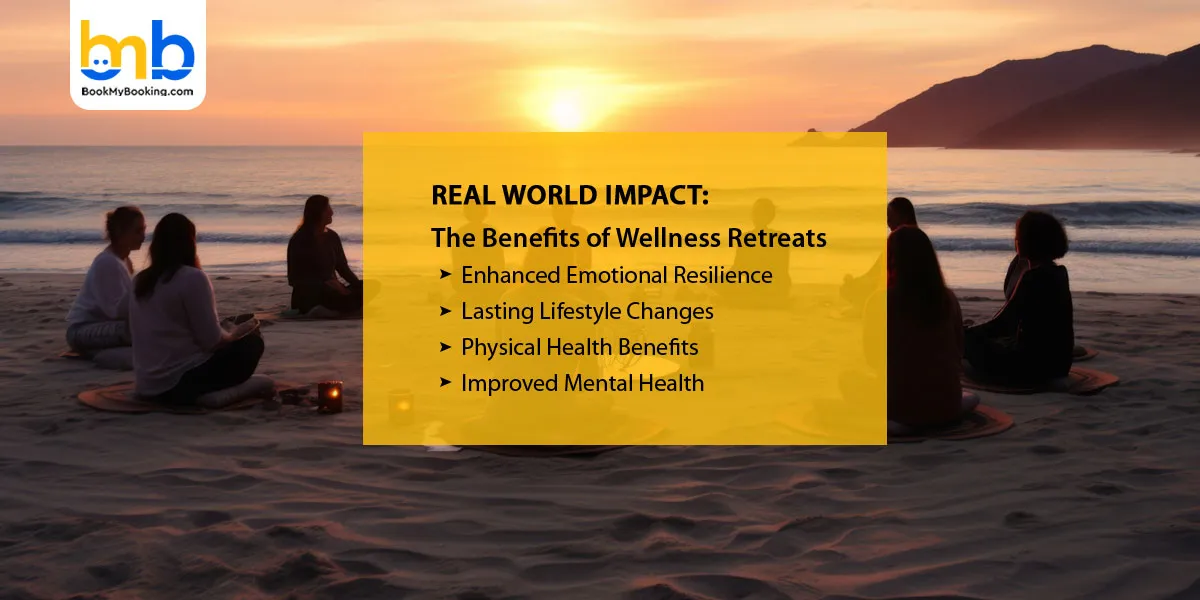
The wellness retreats industry has grown rapidly in recent years, with retreats now available worldwide. This growth is a response to the increasing demand for spaces that prioritise well-being. There are some measurable impacts and benefits that participants experience-
- Improved Mental Health- Studies show that mindfulness practices reduce symptoms of anxiety and depression. Wellness retreats, which often include meditation and relaxation exercises, have been linked to increased mental well-being and lower stress levels among participants.
- Physical Health Benefits- Many wellness retreats emphasise fitness, encouraging healthy activity and balanced nutrition. A holistic study by the Global Wellness Institute found that participants in wellness retreats experienced significant improvements in energy levels, sleep quality, and immune function.
- Lasting Lifestyle Changes- A critical benefit of wellness retreats is that they offer guests skills and knowledge to carry forward into daily life. Many participants report implementing meditation practices and healthy eating habits at home, resulting in long-lasting positive effects.
- Enhanced Emotional Resilience- Participants gain new tools to manage stress, reconnect with their emotions, and handle challenges with greater resilience. This emotional growth benefits their relationships, work-life balance, and overall quality of life with mindful retreats.
Technology in Mindful MICE Retreats
Intentional Use of Digital Tools
Technology is used selectively to:
- Support hybrid participation:
Enable both in-person and virtual attendees to engage through seamless technology fully, ensuring inclusivity and consistent experiences. - Facilitate communication:
Design channels and formats that promote open dialogue, collaboration, and real-time feedback between all participants. - Capture insights:
Collect key observations and data during sessions to inform decisions, improve future retreats, and maximise organisational learning.
Digital detox periods are often incorporated to reduce cognitive overload and encourage presence.
Measuring the Impact of Mindful MICE Retreats
Beyond Traditional Metrics

Success is evaluated using:
- Participant feedback:
Gather structured reflections on experiences, wellbeing, and learning outcomes to evaluate satisfaction and effectiveness. - Engagement levels:
Track active participation, interaction, and enthusiasm during sessions to understand attendee involvement and investment. - Stress reduction indicators:
Monitor physiological and self-reported stress measures to assess the retreat’s impact on mental health and resilience. - Post-retreat performance:
Evaluate how skills, insights, and well-being improvements translate into productivity, decision-making, and team collaboration back at work. - Retention and morale trends:
Analyse workforce retention rates and overall morale improvements following retreats to understand long-term organisational benefits.
These metrics provide deeper insight into organisational health and wellness, and corporate trips.
Challenges and Considerations
❖ Avoiding Superficial Wellness
Mindful retreats must be authentic. Token wellness activities without integration can feel performative and ineffective.
Successful retreats require:
- Skilled facilitation:
Ensure expert facilitators guide sessions effectively, balancing learning, reflection, and interactive engagement for maximum impact. - Thoughtful design:
Curate schedules, activities, and content intentionally to align with participant needs, learning objectives, and wellness goals. - Precise alignment with business goals:
Integrate retreat objectives with strategic organisational priorities to ensure tangible outcomes and measurable value.
❖ Cultural Sensitivity
Wellness travel practices must be inclusive and respectful of diverse backgrounds and comfort levels.
The Future of Mindful MICE Retreats
Mindful MICE retreats are not a temporary response to stress; they represent a structural change in how organisations work and gather.
Future developments include:
- Hybrid wellness retreats:
Combine in-person and digital experiences to expand reach, flexibility, and participation without compromising quality. - Personalised well-being journeys:
Tailor experiences to individual needs, preferences, and health goals, enhancing engagement and personal growth. - Greater integration with leadership strategy:
Embed retreats into broader leadership development programs to strengthen team alignment, succession planning, and organisational culture. - Increased demand from global organisations:
Growing recognition of wellbeing’s role in productivity and retention is driving multinational companies to invest heavily in immersive, strategic retreats.
As competition for talent intensifies, companies that prioritise well-being will lead.
Final Thoughts
Wellness meets work in mindful MICE retreats because modern business demands it. High performance, creativity, and resilience cannot exist without well-being. These retreats offer a sustainable, effective alternative to traditional corporate meetings by honouring both professional goals and human needs. Mindful MICE retreats are not about slowing down business; they are about strengthening it. They create environments where people think clearly, connect deeply, and contribute meaningfully. For organisations, destinations, and MICE professionals, the message is clear:
The future of corporate gatherings lies in mindfulness, balance, and purpose.
Wellness travel is no longer separate from work. It is essential to it.