

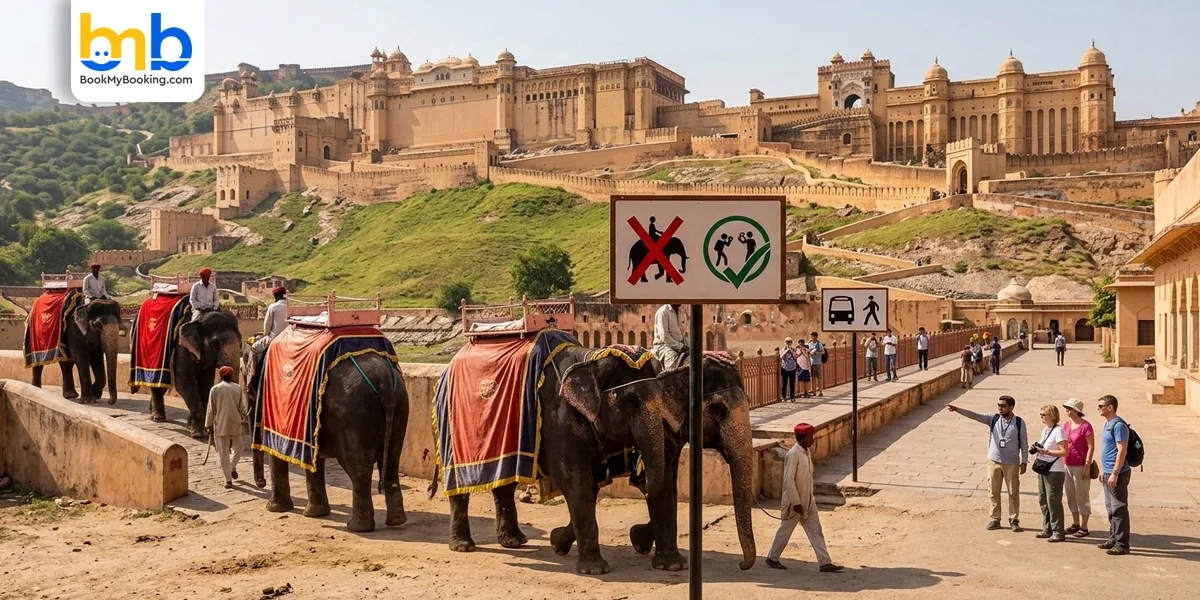
Elephant rides at Jaipur’s historic Amer Fort are seeing a sharp decline in demand, with several international tour operators reportedly removing the experience from their itineraries amid changing tourist preferences and growing concerns about animal welfare.
Once promoted as a quintessential royal experience, elephant rides are no longer attracting the same interest among international visitors. Local travel agencies, guides and tourism stakeholders say that many foreign tourists visiting Amer Fort continue to explore the heritage site but are increasingly choosing alternatives that do not involve animal rides.
Changing preferences reshape Jaipur tourism
According to tourism stakeholders, international visitors have become more conscious of animal welfare and responsible travel practices. Campaigns by international animal-welfare organisations have also contributed to the shift, encouraging travellers and tour companies to reconsider activities involving captive animals.
Ajay Singh Rathore, general secretary of the Tourist Guide Association, Jaipur, said that elephant rides were once a regular part of itineraries for international tourists. However, he noted that his clients had not requested elephant rides in recent years, with some instead showing interest in animal shelters and other experiences.
The decline is also linked to fewer international tourist arrivals, changing travel preferences and rising ride prices. According to a local guide quoted in the report, the cost of a 20-to-30-minute elephant ride has increased from around ₹700 several years ago to approximately ₹2,500. Safety concerns following incidents involving tourists and elephants have also affected demand.
Elephant safari numbers fall sharply
Official figures cited by tourism stakeholders indicate a substantial decline in elephant safari participation at Amer Fort. The number of visitors opting for elephant rides fell from 1,64,608 in 2018-19 to 48,474 in 2025-26 — a decline of more than 70% over seven years.
Although the numbers were severely affected during the Covid-19 pandemic, ridership recovered in subsequent years before declining again. The figures stood at 54,514 in 2022-23, 79,090 in 2023-24 and 67,018 in 2024-25, before dropping to 48,474 in 2025-26.
Responsible elephant tourism emerges
As traditional elephant rides lose popularity, tourism providers are seeing greater interest in experiences centred on animal interaction and responsible tourism. Hathi Gaon, for instance, has attracted visitors interested in activities such as observing, feeding, bathing and painting elephants.
Tourism stakeholders say such experiences are increasingly appealing to families and international visitors looking for alternatives to conventional elephant safaris. At the same time, animal-welfare organisations have called for greater scrutiny of activities involving direct interaction with captive elephants, arguing that even experiences marketed as ethical should be assessed according to animal-welfare standards.
The changing demand signals a broader shift in Jaipur's tourism landscape, as international travellers and tour operators increasingly factor animal welfare and responsible tourism into their travel choices. Amer Fort remains a major attraction, but the traditional elephant ride appears to be losing its place in international holiday itineraries.
#news #responsibletourism #jaipurtourism #elephantsafari #tourismupdate