

In today's fast-paced corporate world, organisations are regularly seeking new ways to attract, motivate, and retain top talent. Traditional incentives such as bonuses, salary hikes, promotions, and employee rewards, while still necessary, are not enough to keep employees engaged and loyal. Modern employees, especially millennials and Gen Z, value experiences, personal growth, flexibility, and well-being as much as, if not more than, financial rewards. This shift in mindset has given rise to a powerful new form of resource motivation: resource incentive travel.
From ultra-luxurious retreats and cross-border off-sites to experiential reward trips and wellness breaks, travel incentives have become one of the most sought-after rewards in the corporate ecosystem.
Reward travel programs offer value beyond monetary worth; they weave memories, learning, connection, and rejuvenation that money alone can't buy.
From an employer's point of view, incentive travel is a strategic business investment that benefits them in multiple ways, such as improving their brand image, reducing employee turnover, and averting productivity decline due to resource burnout. In the highly competitive war for human resources talent in modern companies, progressive businesses stand out as employee-centric. With evolving work models and shifting resource expectations, incentive travel today is no longer a luxury perk but an effective tool for building resilient, inspired, and future-ready teams.
In this blog, we explore why travel has emerged as the ultimate resource incentive in today's corporate world, how it benefits both employees and employers, and why it is shaping the future of workplace motivation. Travel incentives create a more profound psychological impact by linking achievement with aspiration. The employees begin associating high performance with incredible experiences; as a result, their motivation shifts from transactional to intrinsic. All these also significantly help employees build better relationships with one another by encouraging collaboration, cultural exposure, and shared experiences outside their usual workplaces, thereby promoting a corporate travel culture.
The Evolution of Employee Incentives Travel

The incentives provided to employees have undergone significant changes over the last few decades. Initially, during the Industrial Revolution, secure employment and a steady income were of primary concern. Later, as organisational growth became more prevalent, bonuses, stock options, and promotions were prominent in incentivisation policies. But now, due to changes in demographics and organisational exposure, employees’ rewards and expectations are changing too. The new-age workforce is enlightened, migratory, and more inclined towards a work-life balance that provides a sense of accomplishment. With this, new incentive policies are emerging, in which travel incentives and rewards will undoubtedly play a significant role.
How Employee Travel Incentives Align with the Modern Workforce

- Experience over ownership: Today’s employees are increasingly seeking experiences rather than compensation, and thus are more emotionally attached to employee incentive travel as a motivator.
- Recognition other than salary: Travel rewards tend to be more personal in their recognition and celebratory in nature.
- Supports mental well-being: The break from conventional work environments reduces work-related burnout, thereby increasing overall worker morale.
- Encourages learning and exposure: Travel is a great way to experience different cultures.
- Invigorating team bonding: Team travel encourages teamwork and bonding.
- Enhances Branding for Employers: Organisations that offer travel incentives are seen as progressive, employee-centric, and appealing employers.
- Drives long-term motivation: Anticipated reward travel programs help sustain performance momentum and build long-term professional engagement.
Why Monetary Rewards Are Losing Their Impact
While money still plays a significant role in motivation, the approach's motivational effects are momentary. The bonus may give them momentary happiness, but soon it will be needed again as yet another expense. Eventually, they will become desensitised to expecting this type of award as part of their pay. This approach makes employee travel incentives memorable experiences that employees can share in the future. Thus, creating an ongoing positive connection with their job. This emotional connection makes travel rewards far more impactful than cash bonuses, which are easily forgotten.
Additionally, travel incentives satisfy deeper psychological needs such as recognition, belonging, and self-fulfilment. They signal appreciation in a more personal and thoughtful way, making employees feel genuinely valued rather than merely compensated. Shared travel experiences also encourage storytelling, team bonding, and pride, extending the reward’s impact far beyond the trip itself. Unlike cash, which is quickly spent, employee travel rewards create lasting memories that reinforce positive emotions toward the organisation, strengthening loyalty, morale, and long-term engagement.
The Rise of Experience-Driven Work Culture
Modern work culture is increasingly experience-driven. Employees value moments that enrich their lives, broaden their perspectives, and allow them to disconnect from routine stress. Travel delivers all of this and more experiential incentives, taking with the idea that happiness and fulfilment come from meaningful experiences rather than minimal possessions. When companies reward with travel, they show they understand what their people truly want, and it strengthens relationships between employers and employees.
In today's experience-driven work culture, memories of inspirational creativity, improved well-being, and a sense of purpose beyond daily tasks are in demand. Travel experiences encourage cultural exploration, personal growth and mental rejuvenation, helping employees return to work with renewed energy and fresh perspectives. Such initiatives also promote work-life balance, showing that organisations genuinely care about their people as individuals, not just resources, by integrating experiential engagement and positioning themselves as progressive employers who value long-term satisfaction over short-term gains, making corporate travel culture an essential aspect of work-life.
Enhancing Employee Well-Being Mental Health
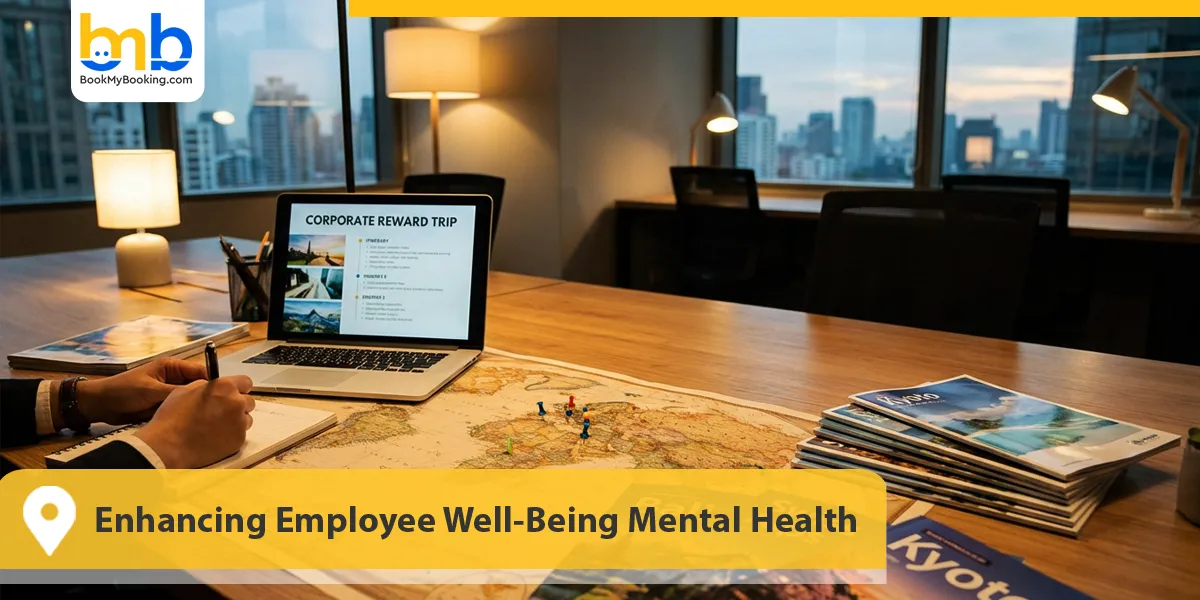
Work stress and burnout are growing workplace phenomena, and employee travel incentives can be a welcome relief, helping employees recharge, take a break from their engagements, and focus more on their mental and emotional health. Wellness getaways, gateway journeys, or leisure travel help employees unplug from their engagements to get a fresh perspective and mindset. Travel incentive programs show employees how much an organisation cares for them by taking an interest in their wellness, fostering loyalty and trust. The importance of reward travel incentive programs in promoting an employee’s well-being can be seen in how they help them take a break from the pressures of work and other aspects of their busy schedules, leading to better mental health as they are exposed to more positive experiences. Breaking free from a routine to conserve energy can help them avert burnout or enhance their mental acuity. When organisations actively support mental well-being through such initiatives, employees feel cared for, leading to higher morale, improved focus, and a healthier, more resilient workforce.
Travel as a Tool for Employee Motivation
- Travel employee incentives are powerful motivational devices since they allow organisations to appeal to some of society’s deepest urges: travel and exploration, relaxation and recreation, adventure and interaction.
- The promise of a fantastic trip or luxury vacation is also a powerful carrot that motivates employees to strive for improvement continually.
- This is unlike many rewards schemes, whereby receiving a reward is not as important as receiving it quickly.
- A travel incentive offers employees something exciting to look forward to. Corporate travel culture is crucial because it motivates employees over the long term.
- The excitement of travel will also make workers more productive and motivated. The travel incentive will also help workers feel accomplished and proud of who they are and what they have achieved.
- This is important because it will make workers feel better and reduce stress by allowing them to relax or step back from work for a while.
- Over time, and with continuous use of travel as a motivational device, organisations will develop a corporate travel culture of appreciation, aspire to more, and become emotionally attached to their expectations for its long-term vision.
- Corporate excursions out of the office and employee incentive travel provide a change of environment that allows employees to step back, pause, and engage more with their reason for work.
- A break from work through travel allows an employee to feel valued and appreciated, as often touching base in a new environment sparks new thoughts, lifts fear, and provides new perspectives, thus creating room for innovation at work.
- It also helps them understand that, as a firm, professional well-being comes first, fostering a sense of belonging in a work environment and making room for reward travel programs.
Strengthening Team Bonding and Collaboration

One of the most prominent advantages of travel incentives is their ability to foster strong interpersonal connections. Employees interact with each other outside formal office environments when they travel together. Relationships deepen, and communication improves. Incentives based on team travel encourage coordination, trust, and mutual comprehension. Whether it's exploring a new city, engaging in adventure activities, or attending cultural events, there is an automatic bonding that translates into better teamwork at the workplace. A joint corporate travel culture breaks down hierarchical barriers, fostering candour and genuine interaction among team members. People understand each other's strengths, personalities, and working styles better in informal settings. The shared understanding strengthens their trust, empathy, and cooperation. This, in turn, improves team communication, accelerates conflict resolution, and fosters frictionless collaboration-everything necessary for superior performance and healthy workplace culture.
Encouraging Work Life Balance

In an era of constant connectivity, maintaining work-life balance is increasingly challenging. Travel incentives and employee rewards encourage employees to take time off, unplug, and enjoy life beyond work. When organizations actively promote travel as a reward, they reaffirm the relevance of balance and personal time. Moreover, this decreases burnout while increasing long-term productivity and resource satisfaction. Travel rewards promote the principles of maintaining a healthy balance between professional and personal life. They encourage employees to disconnect from work, spend quality time with loved ones, and recharge mentally and physically. This balance will result in improved productivity, sustained motivation, and long-term job satisfaction, promoting a corporate travel culture.
Attracting and Retaining The Top Talent
In a competitive job market, unique perks can set an employer apart. Travel incentives, on the other hand, are desirable to job seekers who value experiences and lifestyle benefits. Companies that offer employees rewards in the form of travel also portray themselves to their employees as progressive or employee-centric. Being progressive or employee-centric provides companies with a competitive edge in attracting potential employees or reducing professional resource turnover costs. Providing employee rewards in the form of travel also directly responds to employees' changing expectations, offering rewards that go far beyond monetary or tangible elements of reward systems, satisfying their lifestyle aspirations and preferences. Emotional loyalty to their company will be evoked in employees when they are appreciated or recognised by receiving resource incentive travel rewards for their excellence in performing their jobs or assigned duties, as this portrays them as highly valued employees in their companies or workplaces. From a company's point of view, offering professional travel incentives portrays it as progressive or employee-centric to potential employees, making it more attractive to them. By providing employee rewards aligned with their lifestyle aspirations, companies can create a motivated, hungry workforce that grows within the company rather than seeking growth outside it.
Building a Strong Employer Brand

Employer branding is crucial for shaping the public image and employees' perceptions of the company. Travel reward incentive programs help build the organisation's image by showing that it rewards excellence in its respective fields and provides incentives for the best employees across different departments. These employees can indirectly promote the organisation as the best place to work by sharing their travel stories on the various social platforms available today. There has been a significant change in how organisations use employer branding today; it is no longer the same. Now, employer branding is the experiences that employees provide to the organisation's brand image. Employee Travel incentive programs can help powerfully build an employer's brand by showing the strength of the establishment's commitment to their employees' happiness.” By showing employees' actual experiences during their incentive trips, the workplace can indirectly convey more believable messages than traditional recruitment strategies do for the organisation's brand image. A company known for rewarding performance with enriching experiences is perceived as innovative, empathetic, and forward-thinking.
Driving Performance Productivity
Often, travel rewards programs in this category are based upon specific levels of performance, sales, or project completion. The immediate correlation between work and subsequent rewards promotes performance excellence, as each professional strives for optimal levels. The aspiration for such prizes will motivate individuals, teams, and companies to deliver top-tier output to meet and exceed organisational performance expectations. Rewards in this regard prove instrumental in maintaining a high standard of performance, as employee travel incentives provide a sense of objective, achievable milestones to aspire to, rather than merely cash rewards that tend to blend into expenditure more easily. Employees look forward to long-term events they would like to participate in, thus remaining focused for extended periods while seeking organisational excellence. Additionally, the break travel offers help employees return refreshed, mentally energized, and more focused.
Fosters Learning and Global Exposure
Additionally, non-leisure travel reward incentives, such as educational trips, conferences, and global exposure schemes, can create a more enriching experience for employees. Indeed, global travel fosters cultural awareness, flexibility, and innovation among employees. Indeed, it is no longer possible to succeed in business today through narrow, narrow-minded ideas in global business environments. Therefore, travel incentives go far beyond providing employees with relaxing getaways; companies are offering valuable learning and global exposure through non-leisure travel schemes. Indeed, no resource remains unmoved after being exposed to diverse cultures and business ideas during visits to foreign and novel business locations with various world views, through global business travel or global exposure schemes initiated by companies through their travel incentive reward programs. In fact, cultural awareness, flexibility, and innovation are instrumental in today's global business environments; therefore, global travel or exposure to foreign ideas will foster innovation among employees.
Cost-Effectiveness for Employers

While travel rewards can be costly, they can also pay higher dividends. Savings can be achieved through travel package deals and proper planning. Travel incentives may be expensive now, but they could be a far more viable long-term option against ever-increasing salary and/or money incentives. Travel incentives can be a very cost-effective way for an organisation to reward its employees. Travel reward incentives are long-term personal experiences with a very high perceived value. Unlike money or salary raises, which can be considered fixed expenses over time, travel professional incentives are one-time expenses that yield long-term emotional associations. In addition, travel incentives can be highly beneficial for an organisation in the long run, as they involve no actual monetary costs. They can yield a very high return on investment as a bonus.
The Role of Technology in Travel Incentive Programs
Advances in technology have made it easier for organisations to offer travel reward programs to employees. Various technological options permit organisations to administer travel reward programs more effectively. On one hand, employees can plan the activities to be carried out at the destination and travel at preferred times. On the other hand, technology plays a critical role in effectively managing the complexities of operating travel reward programs. Various technological options make it easier for organisations to navigate their reward programs for employees. In the current dynamic environment, technology has made travel employee rewards planning more manageable for organisations. Various technological options facilitate the management of the complexity involved in operating travel reward programs for employees run by organisations. Similarly, employees can monitor their points and plan activities to be carried out at the destination when they utilise their travel reward points.
Customisation and Personalisation of Travel Incentives
One of the reasons travel incentives are so effective is their flexibility. Companies can tailor trips to employees' preferences, performance, or goals. Whether it is luxury vacations, adventure travel, family vacations, or solo travel, the personalisation in the employee travel rewards ensures employees feel valued and recognised. Customisation is key to getting the utmost out of the travel incentive. Moreover, employees may have varied interests and be at different life stages, so some may not be interested in things others enjoy. Customised travel incentive options allow employees to pursue their passions. Tailored rewards make people feel ‘understood' and ‘respected' as individuals, versus being treated uniformly. In a corporate travel culture, employees who have a choice in their rewards find that satisfaction and engagement increase significantly. Customisation elevates travel incentives from generic perks into deeply meaningful experiences that help build loyalty and motivation.
Case Studies- Companies Embracing Travel Incentives

There are many instances of leading organisations across industries successfully implementing travel incentive programs. Organisations that reward their sales teams with international travel have reported higher motivation and loyalty. Organisations in the tech industry use off-site retreats to boost innovation, and startups use travel reward programs to compete with larger organisations for talent. There are many instances of leading organisations across industries successfully implementing travel incentive programs. Global corporations use incentive travel programs to reward high achievers, such as sales teams or high-performing leaders. Global corporations report higher engagement and retention rates. As companies moved to reward their high achievers with experiential employee incentive travel rather than monetary benefits, they saw high enthusiasm among their employees.
Challenges and Considerations
As the trend towards remote and hybrid work continues to grow, travel incentives are likely to change as well. More and more, retreats where employees can "work from anywhere," digital nomad programs, and "sustainable" travel-related programs are becoming more prominent. These trends clearly illustrate the blending of our workplaces, travel habits, and lifestyle expectations in the current corporate world. As our concept of "work" becomes increasingly employee-centric and flexible, our travel incentives will trend toward "sustainable" and "purpose-driven" reward travel programs as never before. Travel incentives will remain a prominent factor in resource engagement and motivational programs. Though these incentives have positive associations, strategic planning is essential when incorporating them into a firm's business processes and activities. Some factors to consider when undertaking travel incentives include budgeting, inclusiveness, and incorporating resource preferences, alongside other logistical considerations and concerns. Though these incentives have positive associations, strategic planning is essential when integrating them into a firm's business processes and activities, as this ensures inclusiveness and resource allocation across all activities, logistical considerations and concerns notwithstanding, in the corporate travel culture.
The Future of Travel Incentives in Corporate Culture
As more and more employees across industries experience the realities of working remotely and in hybrid environments, travel incentives may see even greater development. Work-from-anywhere retreats, digital nomad programs, and eco-based travel programs may gain significant traction. It shows that integrating work, travel, and lifestyle continues to play an essential role in shaping modern workplace culture. So, we may expect to see more evolution in travel incentives as an employee-based work ethic promoting a corporate travel culture continues to develop. Travel incentives remain an essential driver of resource happiness and business success going forward.
Final Takeaway
The above resource incentives have evolved over the past few years. Gone are the days when incentives were all about employee rewards. Today’s incentives have become holistic, people-oriented concepts. Flexibility, well-being growth, and meaningful experiences have become essential factors. Companies that become aware of this not only motivate their workforce but also develop a robust, resilient work culture. This is even seen in work culture. When applied in a work culture, incentives motivate employees and align their goals with the business's goals.