

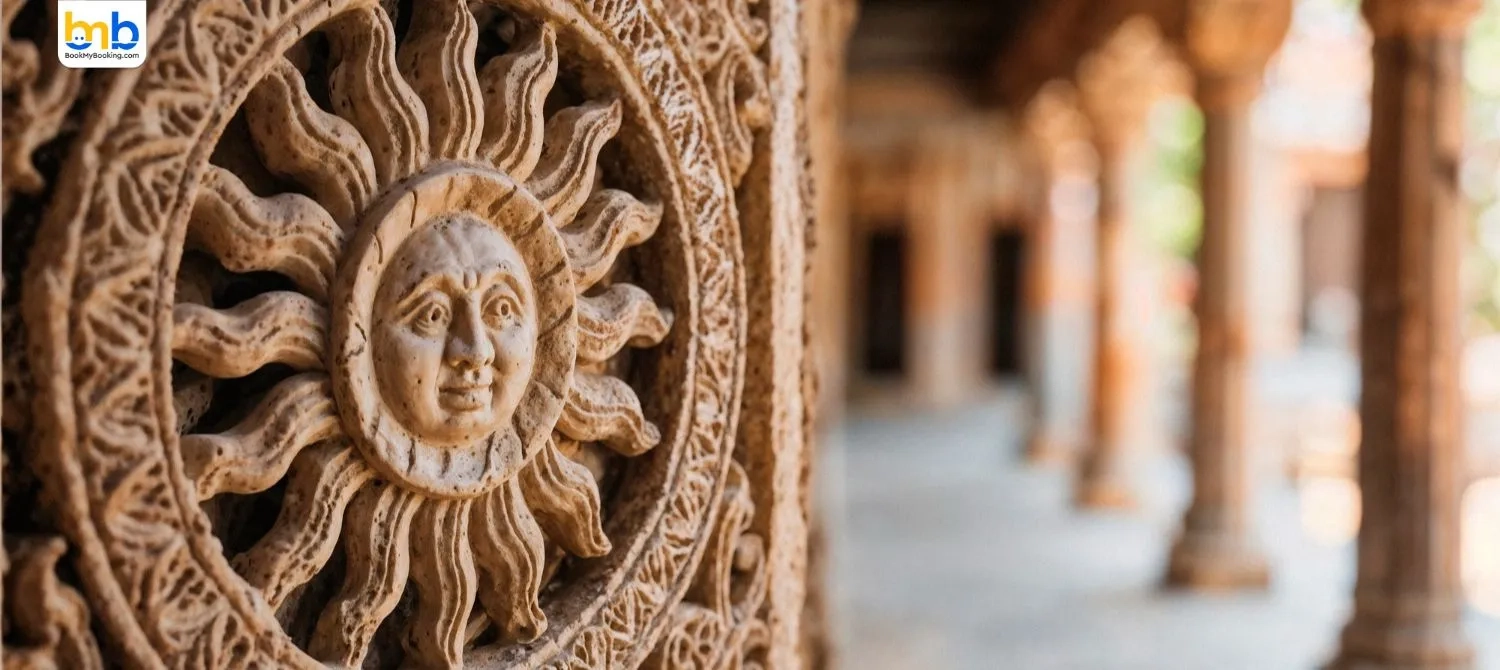
Continuity is an important aspect of Heritage, which is why it is integral to Tourism, both as monuments that showcase and retail history, as well as forts and palaces that are repurposed as royal Heritage to build cultural and artistic connections.
Heritage, they say, is frozen music. It evokes nostalgia with a sense of timelessness, as if you could step back into the same era by simply closing your eyes. It forms the backdrop of several stories, at once layered and poignant, at its grandest some centuries ago, and now in thoughtful restoration. A preservation story speaks of vision care and continuity. And all it takes is a good storyteller who can lend a voice to the bricks and cracking plaster, the fallen arches, and jharokas, courtyards, and doorways as if they are retelling the stories of romance and conflict intricately and populated the building must have seen and endured.
Continuity is an important aspect of Heritage, which is why it is integral to Tourism, both as monuments that showcase and retail history, as well as forts and palaces that are repurposed as royal Heritage to build cultural and artistic connections.
In this context, it is important to clarify that built Heritage, especially in India, encompasses not only palaces and forts but also the history of rulers and invaders' conquests and collaborations.
It also includes regional and vernacular Heritage, both in traditional homes and in public spaces such as temples, sarais, gardens, and hamams. Some of our built Heritage beyond royal architecture can be seen in merchant homes in Jaisalmer, Shekhawati, Chittorgarh, Kutch, etc, which once made famous trade routes for silk, salt, and spices. We must also add the passage of history through various periods of foreign rule, including the monuments of Muslim rulers and the Mughals, and the elegance of colonial architecture, both in functional bungalows, railway stations, and massive administrative buildings left behind by the Raj.
Heritage for tourism doesn't stop with research and the restoration of the building, or with political or sociological history alone. Buildings, crafts, textiles and performing arts tell the stories of climate and the lived culture of evolution and movement of people for trade and craft. Repurposing heritage buildings for hospitality is a way to preserve our history through the skills and craft intelligence needed for restoration.
While all building crafts, such as plastering, flooring, and ceiling decor (such as Khatambandh), as well as wall embellishments, are revived in the process, this ensures the craft's continuity and creates interest and opportunities for craft people. There is a definite ripple effect of Heritage tourism. Consider this: at any destination where a heritage restoration project is proposed for hospitality and tourism, several other valuable aspects of Heritage come into focus and are showcased, thereby ensuring continuity and commercial advantage.
A good example is the fresco art in Rajasthan, which is now a design feature of most buildings built or repurposed for hospitality and tourism. Another example is the special architecture you see in the Kullu region: the stunning perfection of Kathkunia architecture, ideal for Himalayan homes, is now more often seen either as temples or in hotel projects, as local people increasingly shift towards brick-and-mortar modern homes. The Havelis of Shekhawati, known for their detailed and delicate fresco work, had a fresh lease of life following academic awareness and restorations, and were promoted for tourism, offering a fabulous reflection of the times and tales of trade and travel.
Cuisine and culture add another dimension to Heritage, bringing it to life and making it experiential. This could be festivals around music and dance, like the Konark and Khajuraho dance festivals, or famous festivals like Durga Puja in Bengal and Odisha, Holla Mohalla in Punjab, and Kullu Dussehra, when elaborated with traditional music and cuisine, have the potential to create tourism products for discerning travellers. Local and seasonal cuisine has a multisensory effect. When paired with crafts, international music, literature, and Indian spirituality, it has a multiplier effect in promoting the Heritage of India in all its diversity.
Many performing arts, such as Chhau from Mayurbhanj in eastern India, are listed as Intangible Cultural Heritage by UNESCO and serve as effective promotional tools for India's diverse cultural richness, as seen with the Chhau festival held every January in Mayurbhanj, Odisha. Heritage, hence, has a wide-ranging impact beyond what is often seen and perceived through built architecture, and tourism is a driver of awareness and continuity and is hence essential to India's cultural and artistic Heritage.
#bookmybooking #news #tourismindustry #indianheritage #indianhistory #UNESCOsites