

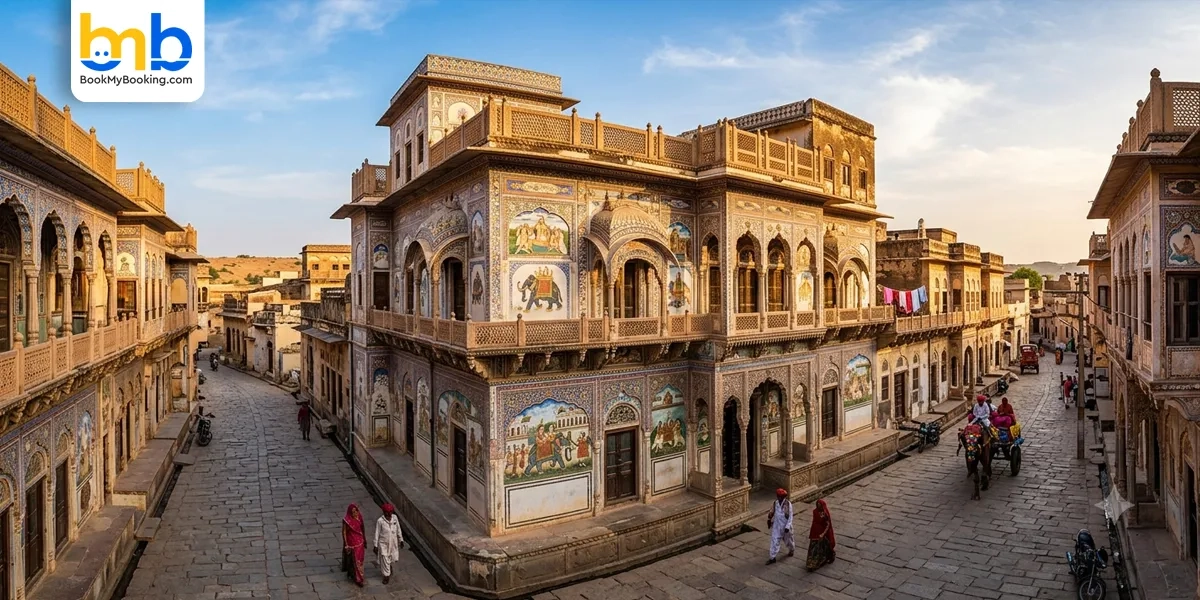
Rajasthan’s famed Shekhawati havelis have taken an important step towards potential UNESCO World Heritage recognition, with the region’s historic painted-haveli towns added to the UNESCO Tentative List.
The proposal covers heritage properties and historic ensembles across 14 towns in the Shekhawati region, including Mandawa, Nawalgarh, Fatehpur, Churu, Jhunjhunu, Alsisar, Bissau, Chirawa, Dundlod, Khetri, Laxmangarh, Mahansar, Ramgarh and Sikar.
The inclusion marks an early but significant stage in the process of securing World Heritage status. It could also strengthen ongoing efforts to document, conserve and restore Shekhawati’s distinctive architectural heritage while giving the region greater visibility among international travellers.
A living canvas of Rajasthan’s heritage
Located in northeastern Rajasthan, Shekhawati is renowned for its richly decorated merchant havelis, characterised by elaborate façades, courtyards, gateways and extensive fresco work.
The murals found across these historic buildings provide a visual record of the region’s cultural and social history. Their subjects range from religious and mythological stories to portraits, everyday life, flora, fauna and traditional motifs. Some paintings also capture the technological and social changes that reached the region during the 19th and early 20th centuries, including new modes of transport and changing lifestyles.
The UNESCO proposal describes the region as a culturally connected group of historic settlements shaped by mercantile traditions, distinctive architecture and artistic expression. Collectively, the selected towns represent a unique heritage landscape developed between the 18th and 20th centuries.
Boost for heritage tourism
The UNESCO recognition could provide fresh momentum to Rajasthan’s heritage tourism sector. Mandawa, Nawalgarh and Fatehpur are already important stops on the state’s heritage circuit, known for their painted mansions and historic streetscapes.
Rajasthan Deputy Chief Minister Diya Kumari described the inclusion as an important milestone in efforts to secure international recognition for Shekhawati’s cultural and architectural legacy.
The development is also expected to encourage greater investment in conservation and sustainable tourism while creating opportunities for communities associated with tourism, traditional crafts and heritage-related services.
What the UNESCO Tentative List means
Being placed on the Tentative List does not mean that Shekhawati has already become a UNESCO World Heritage Site. It is a preliminary stage in the World Heritage process, with properties generally required to appear on a country’s Tentative List before being considered for formal nomination.
For Shekhawati, the listing places its extraordinary collection of painted havelis, historic townscapes and merchant-era architecture on a larger international heritage platform, potentially paving the way for further conservation and recognition in the years ahead.