

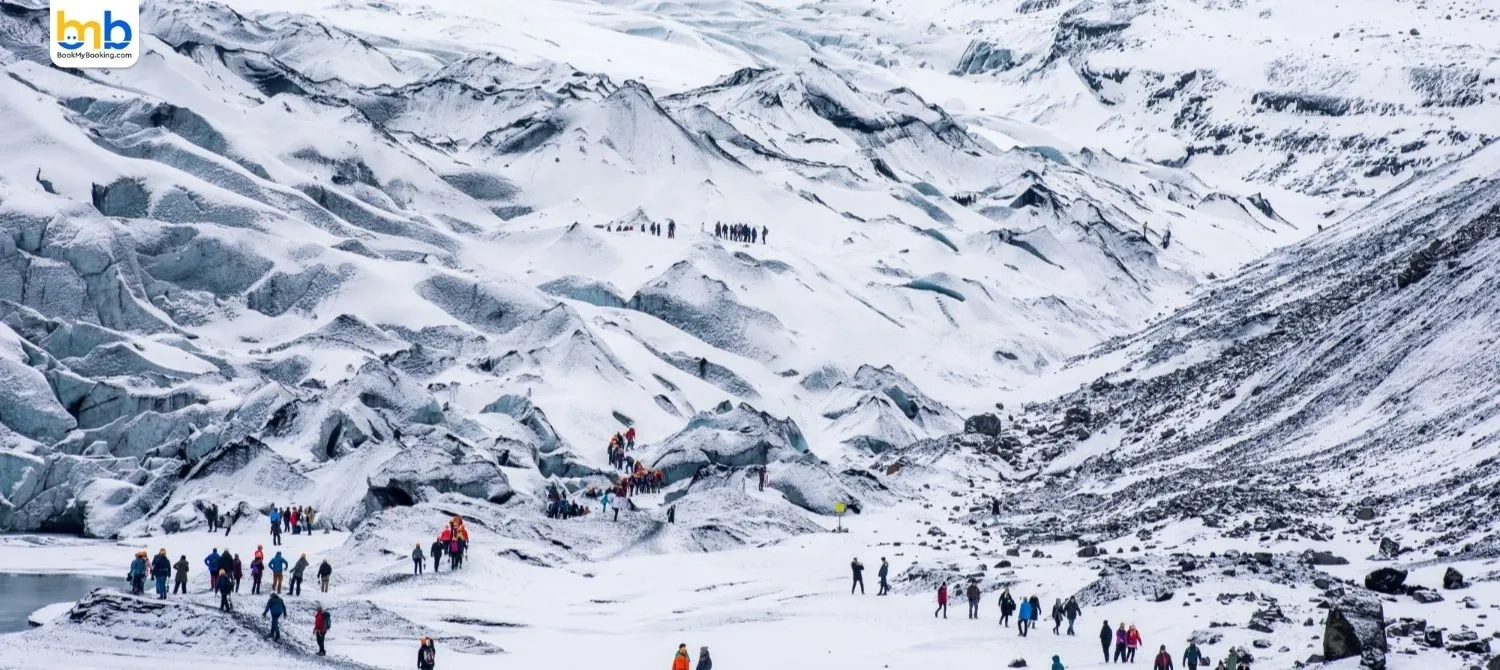
As the calendar turned to 2026, the frozen meadows of Baisaran and the pine-lined slopes of Aru Valley echoed with a sound that had been missing for nearly nine months: the unfiltered joy of thousands of travelers. For the residents of Pahalgam, this isn't just a holiday rush; it is a hard-fought reclamation of their identity.
After the tragic terror attack on April 22, 2025, which claimed the lives of 26 people (including 25 tourists and a local pony operator), the region's tourism industry faced its darkest hour in a decade. However, the dawn of 2026 has brought with it a "White Healing." Through a combination of early snowfall, massive security overhauls, and the sheer resilience of the local community, Pahalgam has successfully signalled that it is back on the global travel map.
The Statistical Swing: From Zero to Ninety
The volatility of the past year is best viewed through the lens of data. In 2024, Kashmir was celebrating a historic high of 2.6 million (26 lakh) visitors. The momentum was so strong that the first three months of 2025 saw nearly 5.25 lakh arrivals.
Then came April 22, when the impact was instantaneous and devastating:
- The Summer Slump: Following the attack, over 90% of bookings were cancelled within 72 hours. Destinations like Aru Valley and Betaab Valley were temporarily closed for security reviews.
- Occupancy Crash: During the peak months of May and June—usually the most profitable period—hotel occupancy in Pahalgam plummeted to below 15%.
- The Year-End Surge: Contrast this with New Year's Eve 2026. Official figures from the Tourism Department confirm that Pahalgam, which boasts nearly 10,000 beds, recorded 90% occupancy.
On December 31 alone, Pahalgam hosted an estimated 7,000 overnight guests and saw a day-influx of over 15,000 visitors. While the total tourist count for 2025 ended at approximately 1.06 million (10.68 lakh)—a significant drop from 2024—the recovery in the final quarter has saved thousands of livelihoods from bankruptcy.
Period / Metric | Status | Key Statistic |
Early 2025 (Pre-Attack) | Peak Growth | 5.25 Lakh visitors in just the first 97 days. |
Post-April 2025 | Sharp Decline | Occupancy crashed to below 20%; bookings hit near zero. |
New Year's Eve 2026 | Massive Recovery | 90% hotel occupancy in Pahalgam; 100% in Gulmarg/Sonmarg. |
Dec 2025 Footfall | Year-End Peak | 1.5 Lakh total visitors in December alone. |
New Year Arrivals | Single Day | 15,000 to 17,000 visitors in Pahalgam on Dec 31st. |
A Shift Towards Confidence in Security Measures
The primary hurdle to recovery was not infrastructure, but perception. Authorities realized that travellers needed to feel safe without feeling "patrolled." The 2026 winter season introduced a sophisticated, multi-layered security grid:
- Tech-Enabled Surveillance:For the first time, night-vision drones are being used to monitor the trekking routes leading to Baisaran (the site of the 2025 attack).
- The "Safety Shield" App:A new digital initiative allows tourists to share their real-time location with a dedicated "Tourist Police" wing, providing immediate assistance in remote meadows.
- Community Policing: Local pony operators and guides have been trained as "First Responders." They act as the eyes and ears of the administration, ensuring that the vast, forested landscapes of Pahalgam remain secure.
"I was hesitant," says Ankit, a traveller from Maharashtra. "But when you see the coordination between the local police and the hospitality staff, that fear evaporates. The security is visible at the entry points but disappears once you are in the market or the meadows."
The Economic Pulse: Jobs Returning to the Valley
Tourism is the backbone of the tertiary sector in Kashmir, and its revival is a social necessity. In the months following the April attack, the "ripple effect" was felt by everyone from the high-end hotelier to the walnut-fudge seller.
Restoring Livelihoods
By November 2025, banks had reported a spike in non-performing assets (NPAs) as hotel owners struggled to pay back construction loans. However, the December surge has allowed businesses to recall staff.
- Employment: Over 4,000 seasonal workers (cooks, servers, and drivers) who were laid off in May have been rehired for the winter season.
- Local Trades: The "Winter Carnival" organised by the Pahalgam Development Authority (PDA) saw record sales for local handicraft vendors, with many reporting their best week since late 2024.
Nature's Intervention: The "Chillai Kalan" Magnet
While policy and security provided the foundation, nature provided the attraction. The onset of Chillai Kalan—the 40 days of the harshest winter, starting December 21—brought timely snowfall to Pahalgam's upper reaches, including Chandanwari and Aru.
Snowfall in Kashmir is more than a scenic backdrop; it is a massive economic driver. Tour operators noted that every time a video of snow in Pahalgam went viral on social media in December, inquiries for "White New Year" packages jumped by 200%.
Diversifying the Destination
A key strategy in 2026 has been pushing "Offbeat Winter" locations. While Gulmarg remains the skiing capital, Pahalgam is positioning itself as the "Quiet Winter Retreat."
- Ice Climbing: For the first time, adventure sports such as ice climbing have been introduced at Chandanwari.
- Homestay Boom: Families are increasingly opting for homestays in nearby villages to experience authentic Kashmiri winter life, complete with Kangris (fire pots) and Pherans.
Remaining Challenges: A Fragile Peace
Despite the celebration, experts warn that the peace is "brittle." The industry remains highly sensitive to "flashpoint events."
Challenge | Impact Level | Strategy |
Security Volatility | High | Continued intelligence sharing and community policing. |
Environmental Degradation | Medium | Strict "No-Plastic" zones in Betaab Valley and Chandanwari. |
Infrastructure Bottlenecks | Medium | Completion of the bypass roads to avoid town-center congestion. |
Price Gouging | Low | Government-regulated rate lists for ponies and taxis. |
The Road Ahead: Cautious Optimism
Despite the festive cheer, the mood among industry veterans is one of "cautious optimism." The recovery remains fragile. Stakeholders are well aware that the industry is sensitive to even minor security disruptions.
Key Challenges for 2026:
- International Footfall:While domestic tourism is thriving, foreign arrivals remain low. In 2025, only 21,361 international tourists visited the Valley—a fraction of the potential.
- Connectivity:Ensuring that the Srinagar-Jammu National Highway and the interior roads to Pahalgam remain open during heavy snow remains a logistical challenge.
- Sustainable Growth:With the massive influx during the New Year, concerns about plastic waste and environmental strain in the Lidder Valley are rising.
Conclusion: A Symbol of Resilience
The revival of Pahalgam is a testament to the fact that the beauty of the Valley and the hospitality of its people are more enduring than the shadows of conflict. As thousands of tourists sang in the New Year under the starlit Himalayan sky, the message was clear: Pahalgam had moved from mourning to hope.
The year 2026 holds the promise of a full recovery, provided the current peace holds. For now, the "Valley of Shepherds" is no longer silent—it is bustling, vibrant, and once again, welcoming the world.
#bookmybooking #news #pahalgamwinter #kashmirrevival #wintertourism #tourism2026