

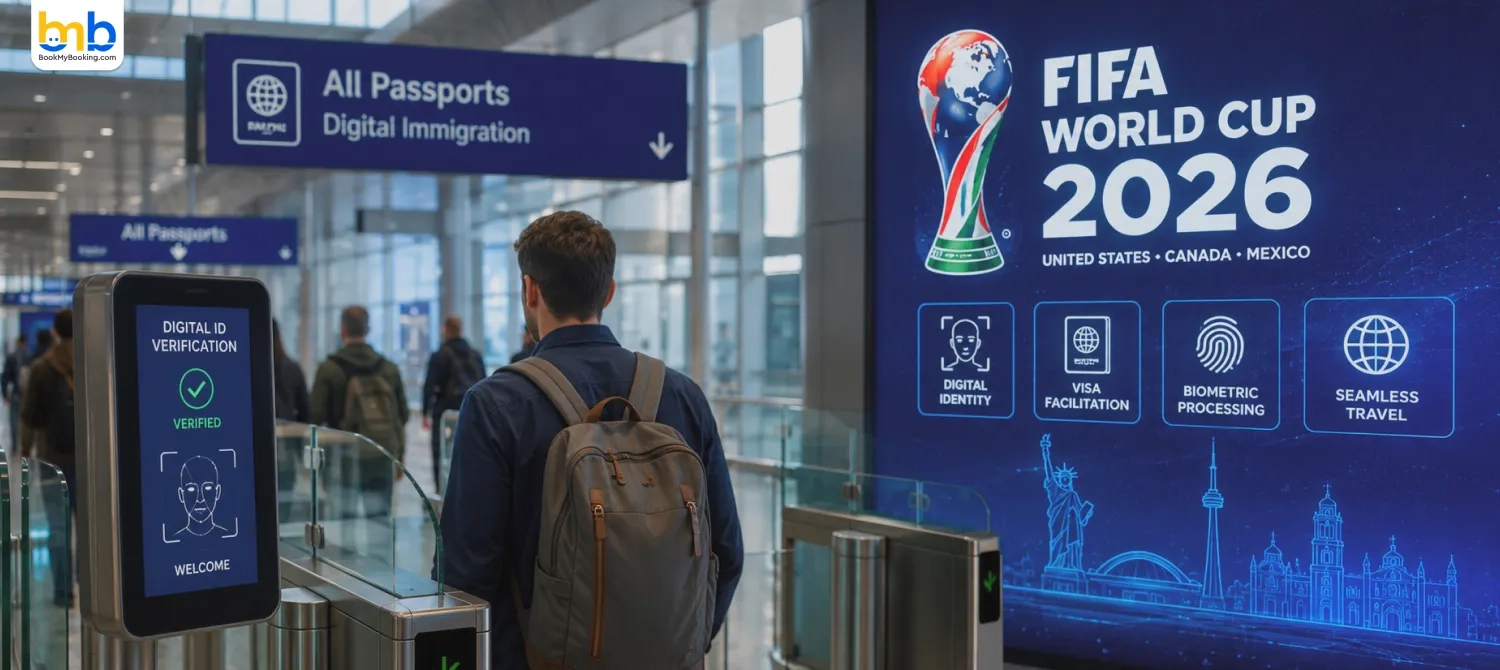
The FIFA World Cup 2026 is set to redefine international travel by showcasing next-generation digital border technologies that promise faster, safer, and more seamless cross-border journeys. According to a recent report by the World Travel & Tourism Council (WTTC), the tournament will serve as a global benchmark for digital identity, visa facilitation, and trusted traveller programmes.
Hosted jointly by the United States, Canada, and Mexico, the 2026 edition will be the largest FIFA World Cup in history, featuring 48 teams from the three host nations. Managing millions of international visitors has accelerated the adoption of smart border technologies that enhance both security and traveller convenience.
Digital Border Management Takes Centre Stage
The WTTC report, titled FIFA World Cup Border Management & Visa Facilitation: 20 Years of Evolution (2006–2026), highlights how major sporting events have continuously driven innovation in immigration and border management.
For the 2026 tournament, governments are increasingly relying on digital identity verification, pre-travel screening, and trusted traveller programmes to reduce airport congestion and streamline immigration procedures.
Trusted Traveller Programmes Enhance Efficiency
One of the key features of the tournament is the expansion of trusted traveller initiatives, allowing pre-approved, low-risk passengers to experience faster immigration clearance.
In the United States, millions of travellers have applied through the Electronic System for Travel Authorisation (ESTA), while programmes such as Global Entry, NEXUS, and SENTRI continue to simplify border crossings for eligible visitors.
These initiatives help authorities process passengers more efficiently while maintaining high security standards.
New Digital Tools for FIFA Fans
To improve the overall travel experience, several digital solutions have been introduced specifically for World Cup visitors.
Among them is FIFA PASS, designed to simplify visa appointment scheduling for ticket holders. Additionally, COMPASS, an AI-powered travel assistance platform, helps travellers understand entry requirements, documentation, and travel procedures before departure.
These technologies are expected to reduce confusion, shorten waiting times, and improve passenger flow across airports and border checkpoints.
Canada and Mexico Strengthen Smart Travel Systems
Canada and Mexico are also expanding their digital travel infrastructure ahead of the tournament.
Canada continues to leverage its NEXUS programme alongside the ArriveCAN platform, enabling eligible travellers to submit customs and immigration declarations digitally before arrival.
Meanwhile, Mexico maintains visa-free access for citizens of numerous countries and continues expanding its Viajero Confiable trusted traveller programme to facilitate smoother international arrivals.
Two Decades of Border Innovation
The WTTC report traces the evolution of travel facilitation across six FIFA World Cups.
From Germany's visa facilitation efforts in 2006 to South Africa's Event Visa system in 2010, Russia's FAN ID programme in 2018, and Qatar's Hayya digital platform in 2022, each tournament has introduced new approaches to simplifying international travel while maintaining robust security standards.
The 2026 World Cup represents the next stage in this evolution by integrating digital identity systems, AI-powered travel assistance, and cross-border coordination across three countries.
Setting the Standard for Future Mega Events
According to WTTC, the success of these digital border initiatives could influence how governments manage international travel beyond sporting events.
As future global events—including the FIFA World Cup 2030, expected to span multiple countries and continents—become increasingly complex, interoperable digital border systems will play a crucial role in ensuring secure, efficient, and seamless travel experiences.
The report concludes that investments in digital border technology not only improve traveller convenience but also strengthen international cooperation, paving the way for a smarter, more connected future for global tourism.
#news #fifa2026 #sportstourism #worldcup #sportsevents #digitaltransformation #innovation #immigration #bordermanagment