

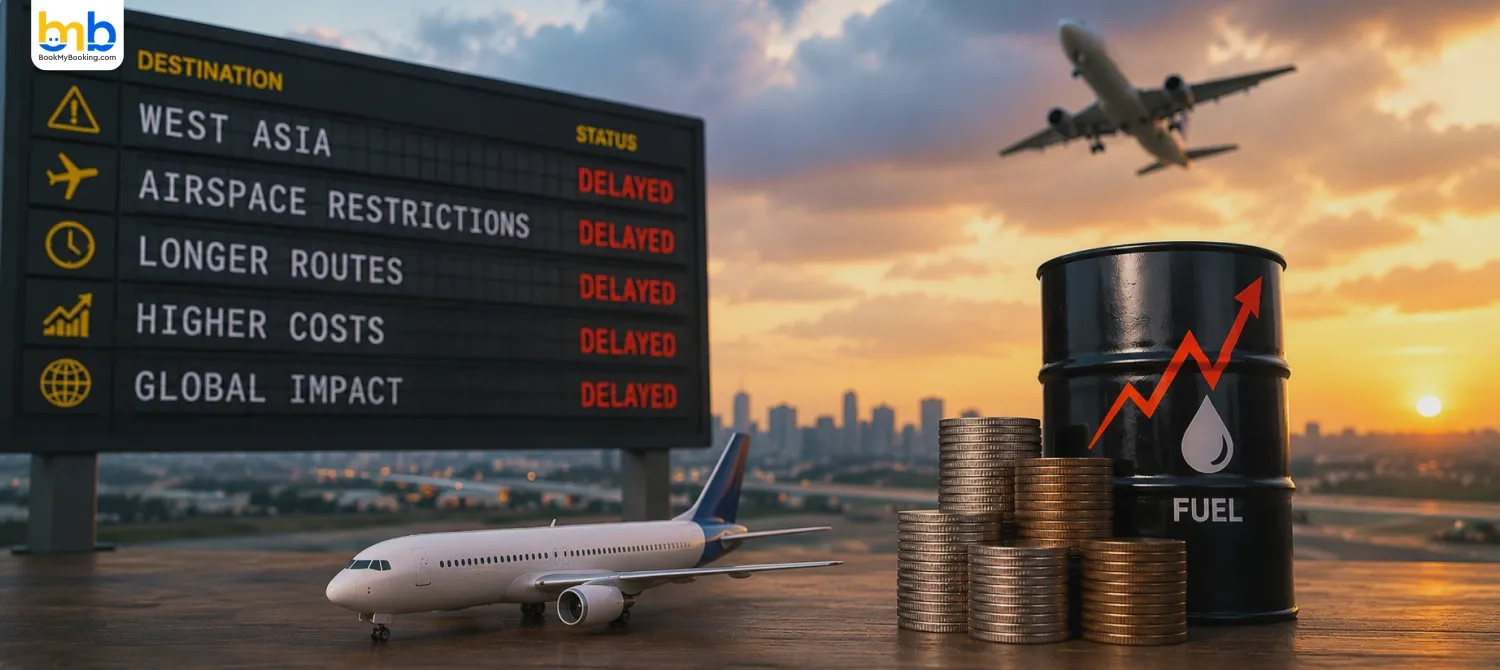
The ongoing geopolitical tensions in West Asia are placing significant financial pressure on airlines worldwide, with rising fuel prices, longer flight routes, and operational disruptions affecting industry profitability. Aviation leaders warn that if the crisis continues, carriers may face increasing challenges in managing costs while maintaining service levels.
Rising Fuel Costs Hit Airline Profitability
One of the biggest concerns for airlines is the sharp increase in Aviation Turbine Fuel (ATF) prices. Fuel remains one of the largest operating expenses for airlines, and recent market volatility has significantly increased overall operating costs.
Industry experts note that elevated fuel prices are making it more difficult for airlines to maintain healthy profit margins, particularly as many carriers are already dealing with aircraft shortages and supply chain constraints.
Airspace Restrictions Add Operational Burden
In addition to higher fuel expenses, airlines are being forced to reroute flights to avoid conflict zones and restricted airspace. These diversions result in longer flying times, increased fuel consumption, additional crew costs, and scheduling challenges.
Longer routes also reduce aircraft utilization, limiting airlines' ability to operate flights efficiently during the busy travel season.
Financial Outlook Remains Under Pressure
Despite continued demand for air travel in many regions, aviation executives caution that profitability is becoming increasingly difficult to sustain. While passenger numbers remain relatively resilient, rising operational expenses are offsetting much of the revenue growth.
The International Air Transport Association (IATA) has already revised its financial outlook for the global airline industry, citing geopolitical instability and fuel market uncertainty as major risk factors for 2026.
Indian Airlines Also Feel the Impact
Indian carriers are experiencing similar challenges as higher ATF prices, currency fluctuations, and restricted airspace continue to increase operational costs. Industry reports suggest that airline operating profits could decline during the current financial year if market conditions remain unchanged.
The combination of expensive fuel, a weaker rupee, and longer international flight paths is expected to weigh heavily on airline balance sheets.
Travelers May Continue Paying Higher Airfares
While fuel prices have shown signs of stabilizing in some markets, aviation analysts believe passengers should not expect significant fare reductions in the near future. Airlines are likely to maintain current ticket prices as they attempt to recover higher operating expenses and offset losses caused by recent disruptions.
Limited aircraft availability and sustained travel demand are also expected to keep airfares elevated across several international routes.
Industry Focuses on Long-Term Stability
Airlines continue to monitor developments in West Asia closely while adapting schedules, optimizing flight operations, and implementing cost-control measures. Industry stakeholders remain hopeful that improved geopolitical stability will eventually ease fuel market volatility and restore more efficient international air connectivity.
Until then, aviation experts expect airlines to remain cautious as they navigate one of the most challenging operating environments in recent years.
#news #indianairlines #westasiaconflict #aviationupdate #iata